
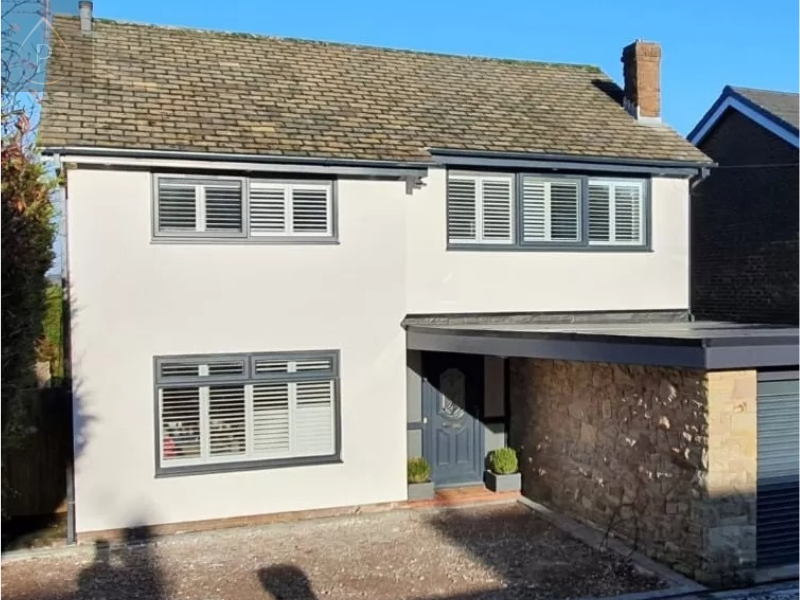
If you manage or own a commercial property in South Wales, you’ve probably dealt with cracked render, water stains on interior walls, or a persistent mould problem that just keeps coming back. You’re not alone. More and more commercial landlords, facilities managers, and building owners across Cardiff, Newport, and Swansea are making the switch to silicone render — and there are very good reasons why. This article explains what silicone render is, why it works so well in the Welsh climate, and — critically — what you need to sort out before you spend a penny on it.
What Is Silicone Render?
Silicone render is a modern, polymer-based exterior wall coating. Think of it as a protective skin for the outside of your building. It combines silicone resins, mineral aggregates, and UV-stable colour pigments into a thin, flexible finish that gets applied over a prepared wall surface.
It’s very different from the traditional sand-and-cement render you’ll find on most older commercial buildings across Wales. Traditional render is rigid and brittle. It cracks over time, absorbs water, and eventually lets moisture into your walls. Silicone render, however, moves slightly with the building as temperatures change — so it doesn’t crack. It also repels water rather than soaking it in.
The colour goes all the way through the material, too. That means you’ll never need to repaint the outside of your building. Popular UK brands for commercial projects include K Rend, Weber, Baumit StarTop, and EWI Pro.
Why South Wales Commercial Buildings Struggle Without the Right Render
South Wales gets a lot of rain. Cardiff, Swansea, and Newport consistently rank among the wettest urban areas in the UK. Add coastal salt air from the Bristol Channel and the Gower Peninsula, and you have conditions that chew through traditional render faster than almost anywhere else in the country.
Here’s what typically happens. Cement render starts to crack after a few years of thermal movement — walls expand in summer heat and contract in winter cold. Those cracks let rainwater in. Once water gets behind the render, it soaks into the wall and works its way inside your building. The result? Penetrating damp, and often mould following close behind.
For commercial property owners, this creates a cycle of expensive, short-term repairs rather than a long-term solution. Older commercial stock — Victorian converted offices in Cardiff city centre, post-war retail units in Newport, industrial units along the Neath and Port Talbot corridor — is especially vulnerable. These buildings weren’t designed with modern weather protection in mind.
6 Reasons Commercial Property Owners Are Making the Switch
1. Hydrophobic Surface Means Fewer Damp Callouts
Silicone render is hydrophobic — that’s a fancy word meaning it pushes water away. Rain hits the surface and runs straight off, rather than soaking in. This dramatically reduces penetrating damp in commercial buildings, which means fewer emergency callouts, fewer tenant complaints, and fewer repair bills.
2. It’s Breathable — And That Matters More Than You Think
Here’s something a lot of people don’t realise. A wall that can’t breathe is just as much of a problem as a wall that lets water in. Silicone render is vapour-permeable, which means any moisture that’s already inside your wall can still escape outward as vapour.
If you seal a wall completely — with a paint or an impermeable coating — you trap that moisture inside. It has nowhere to go. It builds up, condenses on cold surfaces, and feeds mould growth. Breathable render works with your building’s natural moisture movement, not against it.
At PRBG Environmental, we carry out damp surveys on commercial properties across South Wales every week. We regularly find mould problems in buildings where someone has painted or sealed the walls without fixing the underlying issue first. Breathable silicone render, combined with proper damp treatment, is a far smarter approach.
3. It Won’t Crack Over Decades of Welsh Weather
Traditional cement render is rigid. When your building’s walls move — even just a millimetre or two due to temperature change — the render can’t flex with it. It cracks. Those cracks let water in, and the problem starts all over again.
Silicone render is flexible enough to accommodate natural building movement without cracking. Most professionally installed systems carry manufacturer warranties of 10 to 25 years, and many last 30 to 40 years in practice. For a commercial building, that’s the difference between a recurring maintenance headache and a one-time investment.
4. Self-Cleaning Properties Reduce Maintenance Costs
Rain doesn’t just bounce off silicone render — it actually cleans it. The low-surface-energy finish means dirt and organic matter don’t bond strongly to the surface. Rainfall washes grime away naturally. Algae and exterior mould growth are far less common on silicone render than on painted or cement-rendered walls.
For landlords managing multiple commercial properties across Cardiff or Newport, this is a meaningful saving. Fewer external cleaning contracts. Fewer cosmetic repairs. Less time spent on routine maintenance.
5. No More Repainting Cycles
Most painted or cement-rendered commercial buildings need repainting every five to seven years. That’s scaffolding, labour, materials, and disruption to tenants — every few years, indefinitely. Silicone render is factory-coloured all the way through, so there’s nothing to repaint. Even if the surface picks up a minor scuff, the colour underneath is exactly the same.
Over a ten-year period, the savings on repainting alone can offset a significant portion of the initial silicone render investment.
6. EPC Compliance When Paired with External Wall Insulation
If your commercial property needs an EPC upgrade — and new UK regulations are pushing rented commercial stock toward EPC C by 2028 — silicone render can be part of the solution. It’s the standard finish applied over External Wall Insulation (EWI) systems. Fitting EWI improves your building’s thermal performance, and silicone render gives it a durable, weather-resistant outer layer. You address two problems in one project.
Silicone Render vs. Traditional Cement Render — A Quick Comparison
| Factor | Silicone Render | Cement/Sand Render |
| Lifespan | 25–40 years | 7–15 years |
| Crack resistance | High — flexible polymer | Low — rigid and brittle |
| Water repellence | Hydrophobic | Absorbs moisture |
| Breathability | Vapour-permeable | Low permeability |
| Exterior mould risk | Very low | Moderate to high |
| Maintenance | Low — self-cleaning | High — repaint every 5–7 years |
| Long-term value | Excellent | Poor |
The upfront cost of silicone render is higher. However, when you factor in the reduced repair cycles, zero repainting, and fewer damp-related callouts, the long-term economics make a clear case for the switch.
Does Silicone Render Fix Damp and Mould Completely?
This is where most articles get it wrong — and it’s important you understand this before you commission any work.
Silicone render is excellent at stopping penetrating damp from the outside. It keeps driving rain and wind-driven moisture out of your walls. That’s a genuine and valuable benefit. However, it does not fix:
- Rising damp — moisture travelling up from the ground through the building’s foundations
- Condensation mould — caused by poor ventilation and humidity inside the building
- Internal moisture sources — leaking pipes, roof ingress, or poorly sealed windows
- Pre-existing structural water ingress — problems that have been building up for years inside the fabric of the building
If you apply silicone render over a wall that already has active damp or mould, you don’t solve the problem. You hide it — and often make it worse by trapping moisture inside the structure.
At PRBG Environmental, this is one of the most common and costly mistakes we see on commercial properties across South Wales. A landlord invests in a full external render upgrade, but six months later the mould is back on the interior walls. That’s because the render addressed the symptom on the outside, but the root cause was never treated.
The right order of work is:
- Get a professional damp and moisture survey done first
- Treat any rising damp, penetrating damp, or mould at the source
- Fix ventilation issues if condensation is contributing
- Then commission the render upgrade on clean, treated walls
Our team at PRBG Environmental provides specialist mould remediation across South Wales — including full diagnostic surveys for commercial properties in Cardiff, Newport, and Swansea. We’ll tell you exactly what needs treating before you spend money on the external envelope.
Where in South Wales Is the Demand Growing?
Commercial property owners across the region are upgrading their render for slightly different reasons depending on location.
Cardiff has a high density of converted Victorian offices, managed apartment blocks with commercial ground floors, and older buildings that have never had proper external wall treatment. Welsh Government legislation around private rented sector standards is also pushing landlords toward proactive upgrades.
Newport has a mix of post-war commercial stock and older industrial buildings — many with solid-wall construction that absorbs moisture readily. The city centre regeneration programme has also driven interest in improving the appearance and performance of commercial frontages.
Swansea and Port Talbot face the harshest conditions of all. Salt-laden air from Swansea Bay and the Bristol Channel accelerates the breakdown of traditional render faster than almost any other location in Wales. Hospitality businesses, mixed-use coastal commercial units, and retail properties here are particularly motivated to upgrade.
Further inland, towns like Bridgend, Neath, and Carmarthen are seeing demand driven by housing associations and community building managers looking for long-term, low-maintenance solutions for their commercial and mixed-use stock.
What to Do Before Commissioning Silicone Render on Your Commercial Property
Don’t skip any of these steps. Each one protects your investment and makes sure the render actually performs as it should.
- Get a professional damp and moisture survey — not just a render quote. Know what you’re dealing with inside the walls before you touch the outside.
- Treat any existing damp or mould before surface work begins. PRBG Environmental specialises in exactly this for commercial properties across South Wales. Visit our mould remediation South Wales page to find out how we can help.
- Remove failed render completely — applying new render over crumbling old render is a recipe for early failure.
- Check your contractor’s credentials — look for manufacturer-recognised installer status such as Baumit Approved or City and Guilds Assured accreditation. This unlocks manufacturer-backed warranties you can’t get otherwise.
- Check planning requirements — some commercial zones, conservation areas, or listed buildings in Cardiff and Newport may require consent before you change the external appearance of a building.
- Budget for substrate preparation separately — this is where most unexpected costs come from, and it’s non-negotiable for a durable result.
- Pair the render with a ventilation review — if condensation is a factor inside the building, treat it at the same time for full protection.
Conclusion
Silicone render is a smart, long-term investment for commercial property owners in South Wales. It handles driving rain, coastal salt air, and thermal movement far better than traditional cement render — and it removes the repainting and repair cycle that costs landlords money year after year.
However, render is not a cure for damp or mould. If your building already has moisture problems inside the walls, those need diagnosing and treating properly before anything goes on the outside. Skipping that step is the most common — and most expensive — mistake commercial property managers make.
PRBG Environmental works with commercial landlords, facilities managers, and property developers across Cardiff, Newport, and Swansea to identify and eliminate the root cause of moisture in buildings. If you’re planning a render upgrade or dealing with mould that keeps coming back, start with a professional survey. Find out more about our mould remediation services in South Wales or contact our team today to book your survey.
FAQs
Is silicone render worth it for a commercial property? Yes — particularly in South Wales, where the climate is hard on traditional render. The longer lifespan (25–40 years), zero repainting, and reduced damp risk deliver strong return on investment compared with repeat cement render repairs over the same period.
How long does silicone render last? Manufacturer warranties typically cover 10 to 25 years. In practice, a well-prepared and professionally applied system commonly lasts 25 to 40 years with very little maintenance.
Can silicone render stop mould? It reduces the risk of mould caused by exterior water penetration. However, it won’t fix mould caused by condensation, rising damp, or internal moisture sources. Those problems need professional diagnosis and treatment before any render work goes ahead.
How much does silicone render cost for a commercial building in South Wales? Costs vary depending on wall area, system type, access requirements, and how much substrate preparation is needed. Commercial projects typically range from £30 to £60 or more per square metre for a professionally specified system. Always ask for a fully itemised quote.
What’s the difference between silicone render and monocouche render? Monocouche is a through-coloured cement-based render applied in a single coat — it’s more durable than basic sand and cement, but less flexible and less water-resistant than silicone. Silicone render offers superior water repellence, breathability, and crack resistance, making it the better long-term choice for South Wales commercial properties.
Do I need planning permission to apply silicone render to a commercial building? In most cases, no. However, if your building is in a conservation area, is listed, or is subject to specific planning conditions, you should check with your local authority before proceeding. Cardiff, Newport, and Swansea all have conservation zones where external changes may require consent.
