
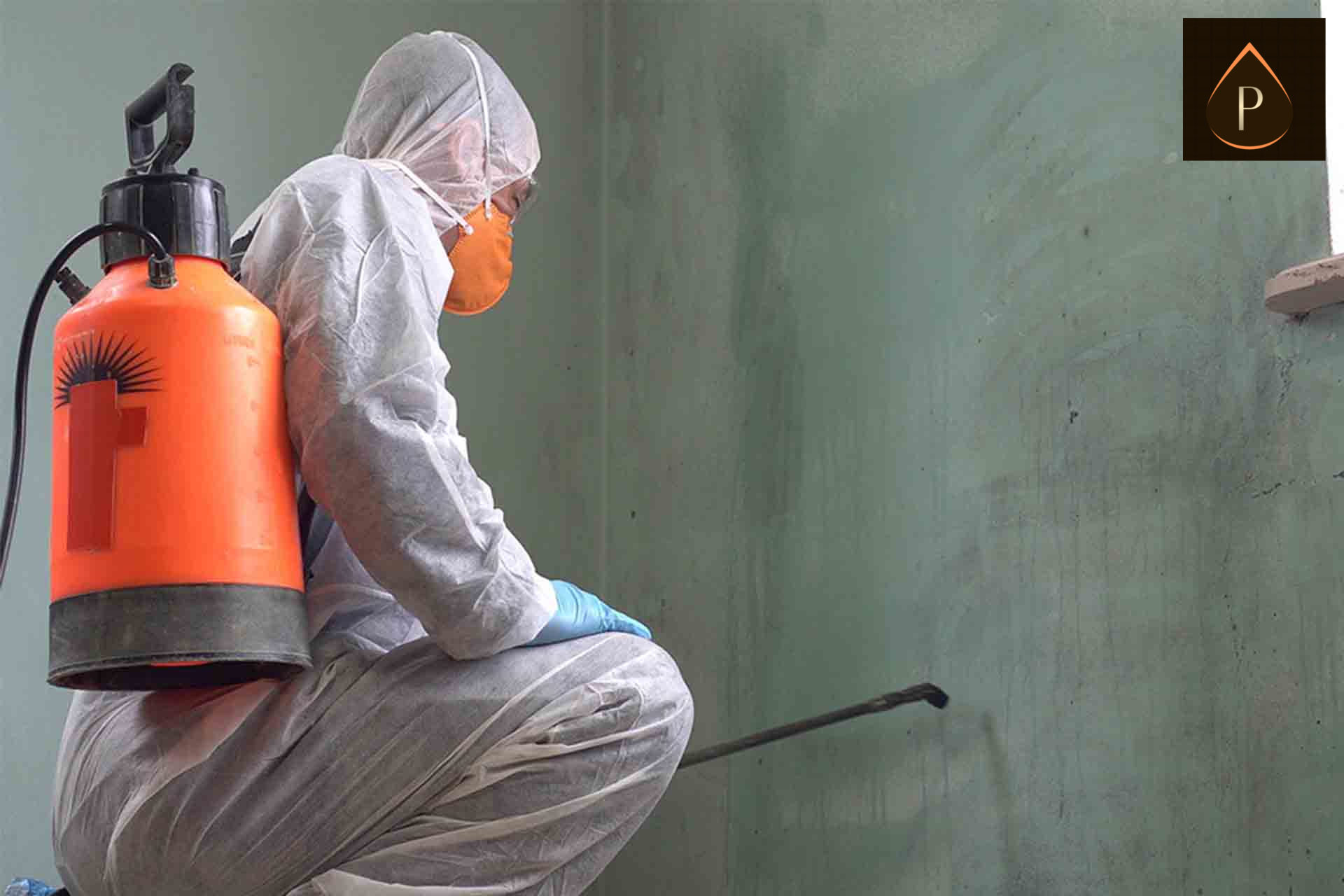
Mould is a living fungus that grows where walls stay damp, while mould stains are the dark marks left behind on paint and plaster. These stains often appear as black, green or brown patches on interior walls and ceilings in UK homes. They may start small; however, they quickly spread and can damage finishes, create odours and affect indoor air quality.
South Wales properties in Cardiff, Newport, Swansea and the Valleys face a perfect storm for mould staining. Older housing, solid walls and single glazing often combine with a damp coastal and valley climate. As a result, condensation builds on cold walls, especially in corners, near windows and behind furniture, and stains return soon after basic cleaning.
PRBG Environmental is a local specialist team focused on mould removal, damp proofing and condensation control for South Wales homes and businesses. The company treats mould on walls and ceilings and also tackles the underlying moisture so stains do not keep coming back.
What Makes a Good Mould Stain Remover for Walls?
A mould killer is designed to kill active mould growth and spores on the surface and just below it. A mould stain remover mainly targets the visible discolouration left behind after mould dies, helping walls look clean again. Many wall products combine both actions; however, some only bleach stains without dealing with the living mould.
Effective mould stain removers for painted or plastered walls use strong but wall‑safe active ingredients. They should cling well to vertical surfaces, have manageable fumes and clearly state whether they suit paint, plaster or tiles. Easy application and simple wipe‑off also matter, especially for busy homes and landlords. Products that include inhibitors or work alongside anti‑mould coatings help slow regrowth when conditions improve.
Even the best mould stain remover will fail in the long run if underlying moisture problems remain. Without fixing condensation, damp or leaks, stains and mould patches will almost always return to the same spots.
Best Mould Stain Removers for Walls in the UK
Homeowners in the UK now have a wide range of mould stain removers for interior walls and ceilings. Popular choices include supermarket sprays, specialist gels and professional‑grade products, each with different strengths and ideal uses. For example, many people rely on brands like HG mould spray, Cillit Bang black mould remover, Astonish mould and mildew removers or Zinsser Mould Killer & Remover for stubborn wall stains. Natural options, such as white vinegar or eco‑labelled cleaners, also appear in UK guides; however, they usually work best on lighter patches.
Instead of pushing one “magic” product, it makes more sense to match the remover to the wall surface, stain severity and household needs. Busy families might prefer quick spray‑on, wipe‑off options, while decorators often choose products that prepare walls for repainting. When stains keep returning despite trying several reputable cleaners, that is a strong sign the issue sits deeper than the paint film.
How to Use Mould Stain Removers on Walls Safely
Preparing the room and surfaces
Before you start, always protect yourself and the space you are working in. Wear rubber gloves, a suitable mask and eye protection, then open windows for fresh air. Cover floors, skirting boards and nearby furniture with plastic or dust sheets so cleaners cannot stain or damage them. It also helps to close doors to limit the spread of disturbed spores into other rooms. Always test any mould cleaner on a small, hidden patch of painted wall first to check for colour or finish changes.
Step‑by‑step cleaning for painted and plastered walls
Most products follow a similar process. First, apply the mould remover evenly over the stained area, then allow it to sit for the recommended dwell time. Next, gently wipe or lightly scrub with a soft cloth or sponge, avoiding aggressive pressure that could strip paint. Rinse if the label instructs, then dry the wall completely using towels, ventilation or a fan. Sprays work well for larger, flat wall sections, while thicker gels suit corners, grout edges and silicone where you need more control.
When to stop DIY and avoid over‑reliance on products
Some warning signs mean you should stop cleaning and seek expert help instead. Blistering paint, recurring stains, strong musty odours or visible damp patches usually indicate deeper moisture problems. At that stage, repeatedly applying off‑the‑shelf cleaners will not solve the root cause and may waste time and money. South Wales homeowners searching “professional mould removal” or “mould removal services near me” can book a PRBG Environmental survey for lasting solutions.
Are Natural Options like Vinegar Enough for Wall Stains?
White vinegar, hydrogen peroxide and bicarbonate of soda can all help with light mould staining on walls. Vinegar’s mild acid can kill some mould types on the surface, while three‑percent hydrogen peroxide both disinfects and gently lightens stains. Baking soda works well as a mild abrasive and deodoriser when you scrub away residue after treatment. Together, these natural options suit small condensation patches in otherwise dry, healthy rooms.
However, natural cleaners have clear limits. They often need more effort, may not reach deep into porous plaster and usually struggle with heavy black mould on cold, damp walls. Commercial mould stain removers and professional treatments typically act faster and penetrate better on severe growth. For South Wales homes with recurring stains, damp patches or structural problems, natural methods are helpful only as a short‑term surface fix. Long‑term safety and results depend on proper mould remediation and moisture control by experienced specialists, not repeated DIY cleaning.
Cleaning vs Curing: Why Mould Stains Keep Coming Back
Root causes: condensation, penetrating damp, rising damp and leaks
Mould stains return because walls stay cold and damp, even after careful cleaning. Condensation forms when warm, moist air hits cold surfaces, feeding mould on external walls, ceilings and window reveals. Penetrating damp from cracked render, failed pointing or leaky gutters lets rain soak brickwork and plaster. Rising damp occurs when ground moisture travels upward through masonry due to a failed or bridged damp proof course. If you keep using stain removers without fixing these moisture sources, you risk damaging paint and plaster while delaying proper repairs.
How PRBG Environmental tackles causes, not just stains
PRBG Environmental focuses on diagnosis first, then treatment. The team carries out moisture and damp inspections across Cardiff, Newport, Swansea and surrounding South Wales areas using advanced meters and thermal imaging to detect hidden leaks and cold, damp zones inside walls and ceilings. These surveys identify condensation patterns, water ingress and structural damp so solutions actually address the root cause. From there, PRBG Environmental can deliver professional mould remediation for homes and commercial buildings, aligning with search needs like “mould removal specialists”, “professional mould remediation” and “commercial mold remediation” in South Wales.
Local Focus: Best Solutions for Mould‑Stained Walls in Your Area
Cardiff and surrounding areas
If you search for mould removal specialists in Cardiff, you probably see stains on cold external walls or bathroom ceilings. Terraced homes and Valleys properties in Merthyr Tydfil, Rhondda Cynon Taf, Caerphilly and the Vale of Glamorgan often struggle with condensation, penetrating damp and older solid walls. PRBG Environmental offers professional mould removal Cardiff homeowners can rely on, with tailored surveys and treatments designed around local building styles and typical moisture patterns.
Newport, Blaenau Gwent, Torfaen and Monmouthshire
In Newport and nearby areas, many residents now search for a black mould removal specialist when stains keep coming back on bedroom or hallway walls. Mould removal services near me queries often link to damp‑related problems in both private homes and rental properties. PRBG Environmental supports Newport, Blaenau Gwent, Torfaen and Monmouthshire with professional mould remediation and moisture inspections that address stains and the underlying damp together.
Swansea, Port Talbot, Neath and Bridgend
Along the Swansea corridor, sea air, driving rain and valley microclimates make mould staining particularly stubborn on walls and ceilings. Homeowners and businesses searching for mould removal specialists Swansea or commercial mold remediation Swansea often deal with exposed elevations and persistent condensation. PRBG Environmental brings regional expertise to Swansea, Port Talbot, Neath and Bridgend, combining surveys, remediation and condensation control to deliver longer‑lasting results for coastal and valley properties.
When to Call a Professional Mould Removal Specialist
If you notice any of the following red flags, DIY cleaning is no longer enough:
- Widespread black staining across large wall or ceiling areas.
- Stains and mould patches that keep returning soon after cleaning.
- Strong, persistent musty odours, even when you cannot see obvious mould.
- Visible damp patches, peeling paint or crumbling plaster near stains.
- Mould affecting external walls, multiple rooms or both upstairs and downstairs.
- Family members with asthma or other breathing issues feeling worse at home.
These situations match search intent such as “professional mould removal” and “mold removal services near me”, especially for South Wales homes and businesses. PRBG Environmental provides safe, compliant professional mould remediation for domestic and commercial properties across Cardiff, Newport, Swansea and surrounding areas. The team combines detailed surveys, controlled removal methods and long‑term moisture solutions so your building stays cleaner and healthier for longer.
1. What is the best mould stain remover for walls in the UK?
2. Can I use bathroom mould remover sprays on painted bedroom walls?
3. Will mould stain removers damage my paint or wallpaper?
4. Do mould sprays kill mould or just bleach the stains?
5. How do I keep mould stains from coming back on my walls?
