
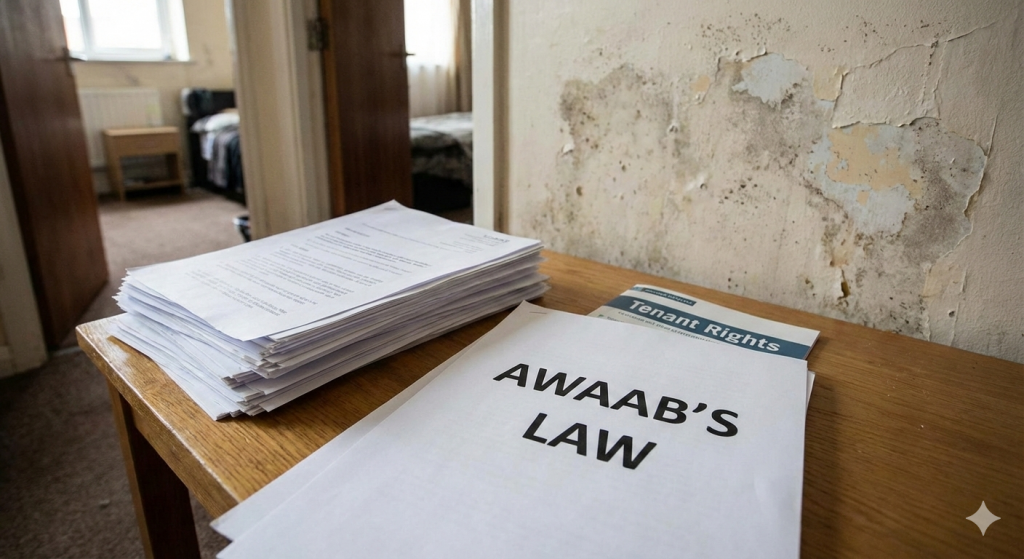
A Complete Guide to New Repair Timelines and Tenant Rights
In 2026, the landscape of UK housing has shifted significantly. Awaab’s Law, originally introduced to combat the “silent killer” of damp and mould, has now entered its next phase of implementation. Whether you are a social housing tenant concerned about your living conditions or a landlord navigating new compliance rules, understanding these strict legally binding timelines is essential.
What is Awaab’s Law?
Awaab’s Law was born out of tragedy following the death of two-year-old Awaab Ishak in 2020, which was caused by prolonged exposure to severe mould in his family’s social housing flat.
Introduced via the Social Housing (Regulation) Act 2023, the law requires social landlords to investigate and fix health hazards within specific, non-negotiable timeframes. As of October 2025, the law is fully in force, and 2026 marks a major expansion of the hazards it covers.
The 2026 Update: Beyond Damp and Mould
While the law initially focused on damp and mould, Phase 2 (commencing in 2026) has broadened the scope to include almost all hazards listed under the Housing Health and Safety Rating System (HHSRS).
Landlords are now legally required to address:
- Excess Cold and Heat: Inadequate insulation or broken heating systems.
- Fire and Electrical Hazards: Unsafe wiring or lack of fire safety measures.
- Structural Risks: Issues with the physical stability of the building.
- Falls and Hygiene: Risks associated with stairs, baths, and food safety.
Legally Binding Repair Timelines
Under Awaab’s Law, the “clock” starts ticking the moment a landlord is made aware of a potential hazard. Here are the statutory maximum timeframes:
| Action | Deadline |
| Initial Investigation | Must be conducted within 10 working days. |
| Written Summary of Findings | Provided to the tenant within 3 working days of the investigation. |
| Emergency Repairs | Must be made safe or completed within 24 hours. |
| Significant Hazards | Repair work must physically begin within 5 working days. |
| Alternative Accommodation | Must be provided if the home cannot be made safe within these windows. |
What Happens if a Landlord Fails to Comply?
Awaab’s Law isn’t just a set of guidelines; it is a legal requirement implied into every social housing tenancy agreement. If a landlord misses these deadlines:
- Legal Action: Tenants can take their landlord to court for breach of contract.
- Compensation: Courts can order the landlord to pay damages for the period the tenant lived in hazardous conditions.
- Specific Performance: A judge can force the landlord to carry out the repairs immediately.
- Ombudsman Intervention: The Housing Ombudsman has increased powers to issue “Special Reports” and fine non-compliant providers.
Is Awaab’s Law Coming to the Private Rented Sector (PRS)?
Yes. Following the Renters’ Rights Bill, the government has moved to align the private sector with social housing standards. Throughout 2026, private landlords are being brought under similar obligations. If you are a private tenant, you now have a much stronger legal footing to demand that damp, mould, and da
