
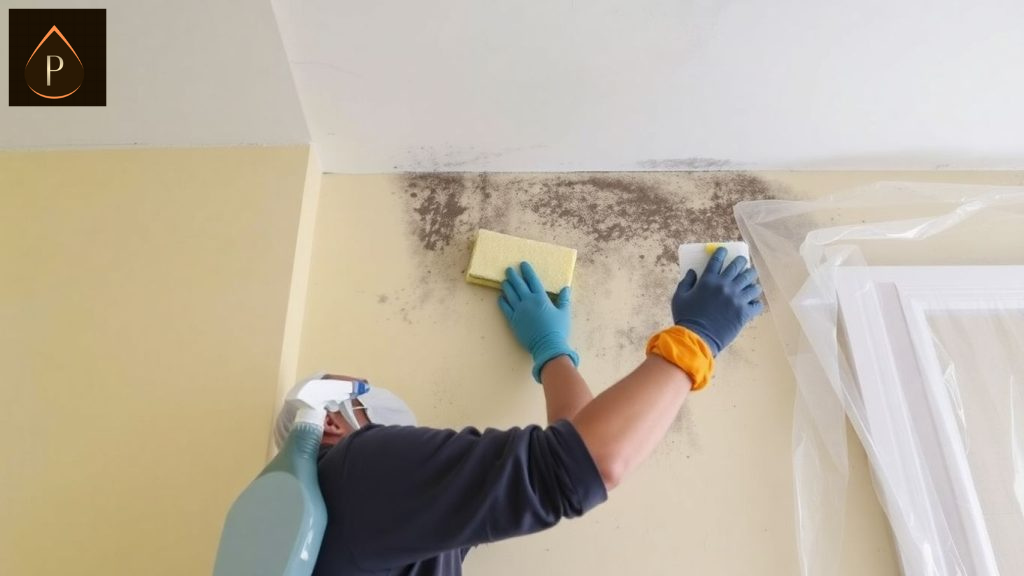
Wall mould grows when excess moisture and everyday condensation sit on cold walls and ceilings for too long. It often appears as black, green or grey patches on painted surfaces, especially in corners and behind furniture. These patches may look small at first; however, they can spread quickly and damage plaster, paint and indoor air quality.
South Wales homes in Cardiff, Newport and Swansea face extra risk because of frequent rainfall, high humidity and older housing stock. Many properties were built before modern damp proofing and ventilation standards, so moisture can easily penetrate walls and linger indoors. As a result, even normal daily activities like cooking, showering and drying clothes can trigger recurring mould on walls and ceilings.
PRBG Environmental offers expert mould remediation, damp proofing and condensation control tailored to these conditions. The team delivers detailed moisture and damp inspections plus safe, professional removal to protect homes and businesses across Cardiff, Newport, Swansea and surrounding areas.
Is It Safe to Clean Mould Yourself?
Mould releases tiny spores that can irritate your nose, throat, lungs, eyes and skin, especially in damp rooms. Children, older adults and anyone with asthma or other breathing problems feel these effects more quickly. Therefore, every patch of mould on your walls deserves attention, even when it looks small or harmless.
DIY cleaning is usually safe when mould covers a small, surface‑level area on painted walls, and no one in the home has serious respiratory issues. However, you should avoid DIY work when patches cover large areas, spread across several rooms or keep coming back after cleaning. Visible mould linked to leaks, strong musty smells, condensation or structural damp should always trigger expert support instead.
PRBG Environmental provides professional mould remediation plus detailed moisture and damp inspections across South Wales. The team identifies root causes, safely removes black mould and designs long‑term prevention plans so you do not face the same problem again.
Common Causes of Mould on Walls in Cardiff, Newport & Swansea
Condensation is the most common cause of wall mould in South Wales homes, especially during colder, wetter months. Warm, moist air from cooking, showering or drying clothes hits cold walls and windows, then water droplets soak into paint and plaster. Poor ventilation makes this worse because moist air cannot escape from bathrooms, kitchens and busy bedrooms.
Damp from outside also drives mould growth on walls and ceilings. Penetrating damp happens when damaged brickwork, guttering, render or roof tiles let rainwater track through external walls. Rising damp occurs when moisture travels up from the ground due to a failed or bridged damp proof course. In Cardiff terraces and valley streets across Rhondda Cynon Taf, Merthyr Tydfil and Caerphilly, these issues often affect older masonry and solid walls.
Student lets in Newport and coastal or valley properties around Swansea, Blaenau Gwent, Torfaen, Monmouthshire, Neath, Port Talbot and Bridgend see similar problems, especially where insulation and ventilation are poor.
How to Remove Mould from Painted Walls Without Damaging Paint (Step‑by‑Step DIY Guide)
Safety first: Protect yourself and your home
Before you start, always protect yourself from spores and strong cleaning products. Wear gloves, a snug mask or respirator and proper eye protection, then open windows to improve airflow. If possible, close the door to keep disturbed spores away from other rooms and soft furnishings. When using bleach or commercial mould removers, follow the manufacturer’s directions carefully and avoid over‑spraying near your face. Never mix bleach with vinegar or other cleaners because this can create dangerous gases in a small space.
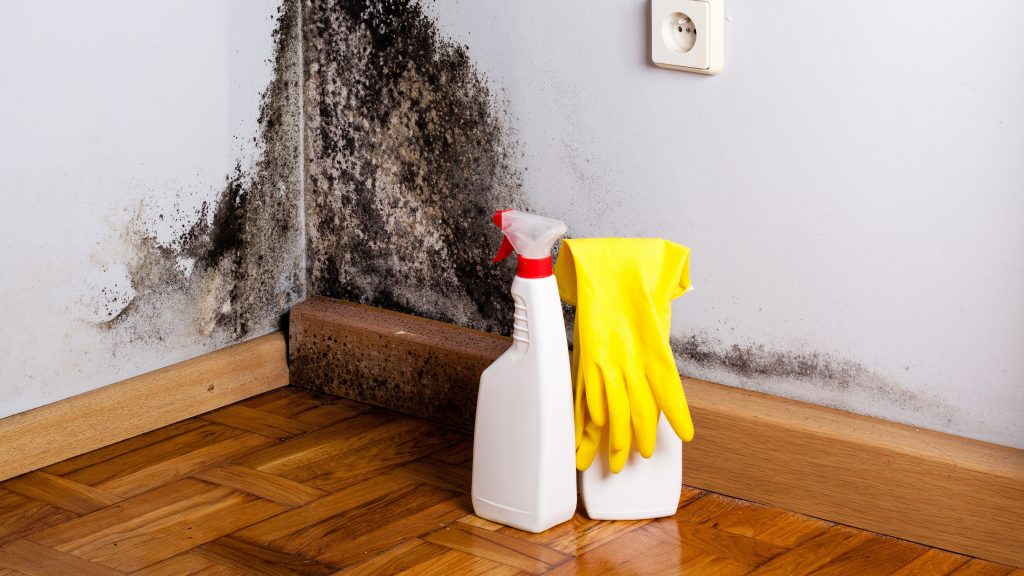
Preparing the wall surface
Start by checking how large the mould patch is and whether it sits on the surface or affects deeper plaster. Look for signs like bubbling paint, damp patches or flaking plaster, which suggest underlying moisture problems. Next, move furniture away from the wall to create a clear working area. Cover floors, skirting boards and nearby items with plastic sheets or dust sheets so cleaning solutions cannot stain or damage them.
Gentle cleaning methods safe for paint
Begin with the mildest option, such as warm soapy water or a light, diluted mould‑killing solution. Apply the mix to the affected paint using a soft sponge or cloth rather than a stiff brush. Work in gentle circular motions and avoid aggressive scrubbing so the paint film does not peel. Afterwards, wipe the area with clean water to remove residue, then dry the wall thoroughly with a towel and good ventilation. Drying well helps stop moisture getting trapped behind the paint layer.
When to use dedicated mould remover sprays on walls
Sometimes a specialist mould remover spray works better than basic cleaners, especially on stubborn black mould. UK products such as HG mould remover, Zinsser treatments and other fungicidal cleaners are designed for walls and ceilings. “Mould killer” products focus on killing spores, while “stain remover” formulas mainly lift discolouration from the surface. Many people also ask about Cillit Bang or Dettol mould and mildew sprays on painted walls, so always test a small hidden patch first. If the paint softens, discolours or turns patchy, stop immediately and choose a gentler wall‑safe option.
Treating stubborn stains without stripping paint
Even after mould dies, faint yellow or grey staining can remain on the wall. In that case, repeat a gentle cleaning cycle rather than scrubbing harder, and use only soft, non‑abrasive pads. If stains still show, consider a dedicated stain‑blocking or mould‑resistant primer made for problem walls. Once the area is completely dry, you can spot‑repair or repaint with anti‑mould or anti‑condensation paints to improve long‑term protection.
Natural Methods to Remove Mould from Walls
Vinegar, baking soda and other eco‑friendly options
Natural cleaners can work well on light mould patches on painted walls when used carefully. White vinegar contains mild acid that helps kill many common mould species on household surfaces. Spray undiluted vinegar or a half‑vinegar, half‑water mix onto the patch, then leave it to sit for at least thirty minutes before gently wiping.
A baking soda paste, made with a little water, can then help lift residue and reduce odours without harsh fumes. Hydrogen peroxide at three percent strength is another option; apply, allow ten minutes of dwell time, then wipe and dry. Natural methods are kinder to indoor air and sensitive skin; however, commercial fungicidal sprays usually work faster and perform better on stubborn black mould.
When natural methods are not enough
Eco‑friendly approaches are best for small patches caused mainly by everyday condensation on otherwise sound walls. If mould keeps returning after natural cleaning, spreads across several walls or appears with damp stains, peeling paint or leaks, deeper problems likely exist.
At that stage, stronger products and professional mould remediation usually give safer, longer‑lasting results than repeated DIY attempts. PRBG Environmental acts as the go‑to professional mould removal partner for homes and businesses across Cardiff, Newport, Swansea and nearby South Wales areas. The team combines safe removal, moisture and damp inspections and prevention advice so residents are not stuck in a cycle of constant cleaning.
How to Remove Mould from Walls and Stop It Coming Back
Fixing the root cause: condensation, leaks and damp
Cleaning visible mould is only half the job; if moisture stays, the patches almost always return. Ongoing condensation, hidden roof leaks or rising damp keep walls cold and wet, which gives mould a perfect environment. Therefore, it is essential to find and fix the source, not just wipe marks from the paint. PRBG Environmental provides moisture and damp inspections, including thermal imaging and leak investigations, across Cardiff, Newport, Swansea and nearby South Wales areas. These surveys help pinpoint hidden damp within walls and ceilings so repairs and treatments actually last.
Improving ventilation and humidity control
Good airflow and steady humidity make a huge difference to mould prevention. Trickle vents, regularly used extractor fans in bathrooms and kitchens, and short daily airing periods help remove moist air before it condenses. Dehumidifiers and balanced heating patterns also reduce condensation on cold external walls, which is especially important in South Wales’ damp climate. As part of a professional survey, PRBG Environmental can recommend targeted condensation control measures suited to each property’s layout and usage.
Protective paints, sealers and long‑term coatings
Once walls are dry and structurally sound, specialist coatings can help keep future mould at bay. Anti‑mould paints, anti‑condensation coatings and stain‑blocking primers are designed for previously affected walls and ceilings. These products raise surface temperature, resist moisture and slow mould regrowth, especially in high‑risk rooms. Upgrading to mould‑resistant systems works best after remediation in bathrooms, bedrooms and cold north‑facing walls that historically attract condensation.
When to Call a Professional Mould Removal Specialist
Red flags that DIY is no longer enough
Some mould situations are too risky or extensive for DIY cleaning and need specialist support instead. Widespread black mould, strong musty odours, visible structural damp or patches that keep regrowing after treatment are key warning signs. You should also stop DIY attempts if anyone in the household has breathing difficulties or if mould appears on external walls or around major leaks. At this stage, searches like “mould removal services near me”, “professional mould removal”, “black mould removal specialist” or “commercial mold remediation” are the right next step for South Wales homes and businesses.
What professional mould remediation involves
Professional mould remediation follows a clear, multi‑step process to protect health and property. Specialists begin with a detailed survey, moisture readings and root‑cause diagnosis before planning safe removal. They then use controlled methods to remove contaminated material, dry affected areas and apply treatments that help prevent mould returning. PRBG Environmental delivers this professional mould remediation service for both residential and commercial properties across Cardiff, Merthyr Tydfil, Rhondda Cynon Taf, Caerphilly, the Vale of Glamorgan, Newport, Blaenau Gwent, Torfaen, Monmouthshire, Swansea, Port Talbot, Neath and Bridgend.
Local Mould Removal & Damp Surveys in Your Area
Cardiff and surrounding areas
Homeowners searching for mould removal specialists in Cardiff often deal with condensation, older terraces and hidden damp in Valleys properties. PRBG Environmental provides professional mould removal Cardiff residents can trust, with local surveys and rapid response across Merthyr Tydfil, Rhondda Cynon Taf, Caerphilly and the Vale of Glamorgan. Whether you type “mould removal services near me” or need help with a specific black mould issue, the team designs tailored solutions for typical Cardiff and Valleys housing styles.
Newport and surrounding areas
In Newport and nearby areas, many people now search for a black mould removal specialist who understands both modern apartments and older housing. PRBG Environmental supports homes and commercial premises in Newport, Blaenau Gwent, Torfaen and Monmouthshire with professional mould remediation and detailed moisture inspections. Local businesses benefit from expert advice that goes beyond basic cleaning and tackles the real causes of damp and mould in busy buildings.
Swansea, Port Talbot, Neath & Bridgend
Along the Swansea and South West corridor, coastal moisture and valley microclimates make mould particularly persistent on walls and ceilings. PRBG Environmental offers mould removal specialists in Swansea and nearby Port Talbot, Neath and Bridgend, including options suited to commercial mould remediation needs. Experience with sea air, driving rain and exposed elevations means the team can recommend long‑term strategies, not just temporary fixes.
Call to Action: Book a Professional Mould Survey with PRBG Environmental
If you live in Cardiff, Newport, Swansea or any surrounding South Wales area, now is the time to tackle wall mould properly. Request a professional moisture and damp survey or ask for a tailored mould remediation quote from PRBG Environmental to protect your home or business.
PRBG Environmental specialises in expert mould remediation, damp proofing and condensation control designed to eliminate the root cause of moisture, not just surface mould. With advanced diagnostics, long‑term prevention coatings and ventilation solutions, the team delivers lasting results for properties across South Wales, backed by a clear commitment to healthier, more durable buildings.
Can you remove mould from walls without damaging paint?
What is the best mould remover for walls in the UK?
Does white vinegar really remove mould from walls?
How do you remove black mould from painted walls?
How do I permanently get rid of mould on walls?
Is it safe to sleep in a room with mould on the walls?
