
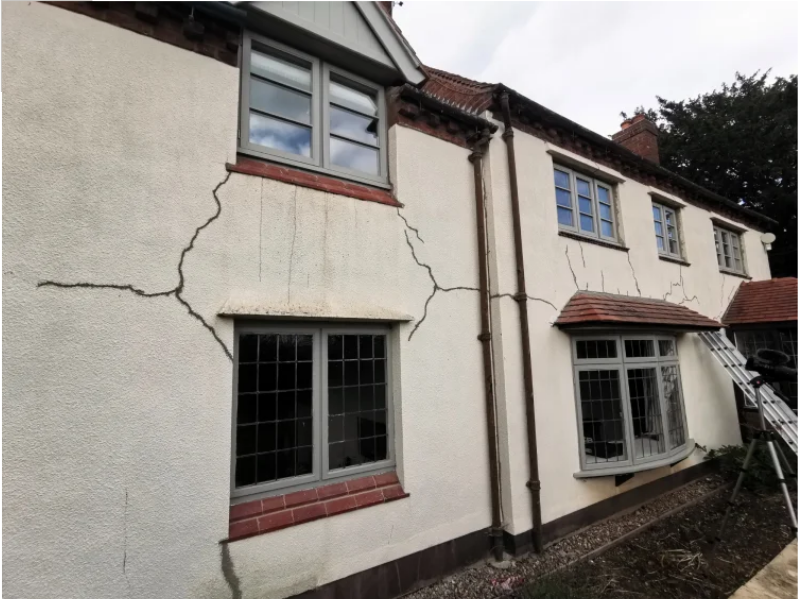
If you’ve spotted thin lines spreading across your render, you’re probably wondering what’s going on underneath. This article explains why render cracks in the first place, what those cracks usually mean, and how to fix the problem for good rather than papering over it. It matters because cracked render is rarely just a cosmetic issue. In many South Wales homes, it’s the first visible clue that water has already found a way in.
What Causes Render to Crack?
Render cracks for several reasons, and most of them come down to movement, moisture, or poor application. Understanding the cause helps you choose the right fix instead of wasting money on a repair that won’t last.
Natural Shrinkage During Curing
Cement-based render shrinks slightly as it dries. Water evaporates from the mix, and the render reduces in volume while it’s bonded tightly to the wall beneath. This creates internal tension. When that tension builds up too fast, fine hairline cracks appear across the surface. You’ll often see this pattern on newer rendered walls within the first year.
Substrate Movement and Settlement
Buildings move, even slightly, as the ground beneath them shifts. New extensions commonly settle during their first one to three years. Older Welsh terraces, especially those built on clay-rich soil, can also experience gradual movement over decades. Because render is rigid, it can’t always flex with the wall behind it, so straight or stepped cracks tend to form around windows, doors, and corners.
Poor Application or Missing Reinforcement
A rushed or under-prepared job almost always shows up later as cracking. If the wall wasn’t cleaned, primed, or keyed properly before rendering, the bond between render and substrate weakens over time. Skipping fibreglass mesh reinforcement at stress points makes things worse, since the mesh is what allows the render to absorb small movements without splitting.
The Wrong Render for the Substrate
Not every render suits every wall. Soft, lightweight blockwork needs a flexible system, while dense concrete needs a different primer and approach entirely. Installers sometimes apply a one-size-fits-all render across mismatched substrates, and the result is a finish that cracks within months instead of years.
Weather Exposure
South Wales gets more than its fair share of wind-driven rain, and that takes a toll on exterior walls. Freeze-thaw cycles are particularly damaging: water seeps into tiny gaps, freezes, expands, and forces the crack open further. Coastal properties around Swansea and Cardiff Bay face additional stress from salt-laden air, which accelerates wear on cement-based renders especially.
In short, render cracking usually comes down to one or more of these issues:
- Natural shrinkage as the render cures
- Movement in the building or ground beneath it
- Poor preparation or missing reinforcement mesh
- A render type unsuited to the wall
- Ongoing weather exposure, particularly in coastal or exposed locations
The Hidden Link Between Cracked Render and Damp
Here’s the part most render guides skip over. A crack in your render isn’t just an eyesore. It’s an open door for water, and once water gets behind the render, the problem rarely stays outside.
How Water Gets In Through Render Cracks
Rain finds its way into even the smallest crack. Once inside, it sits against the wall, gets absorbed into the brick or block, and slowly works its way toward the inside of your home. You might not see any sign of this for months. However, by the time damp patches appear on an internal wall, moisture has usually been building up for a while.
Penetrating Damp Versus Condensation
Cracked render typically causes penetrating damp, which is moisture pushing in from outside through a defect in the wall. This differs from condensation, which forms when warm, moist indoor air meets a cold surface. Both problems can look similar on a wall, but they need completely different fixes. That’s why a proper diagnosis matters more than a quick patch job. At PRBG Environmental, this is exactly where our surveys start: working out which type of moisture you’re dealing with before any repair begins.
Why Patching Alone Doesn’t Solve It
Filling a crack and repainting over it might look great for a season. Unfortunately, if water has already saturated the substrate behind that crack, the moisture stays trapped. It’ll keep pushing against the new patch until it finds another weak point. This is why cracks so often return in the same spot, even after a repair.
Signs Damp Has Already Reached Inside
Watch for these warning signs on internal walls near a cracked area of render:
- Peeling or bubbling paint
- A persistent musty smell in the room
- Dark or greenish mould spots near skirting boards or ceilings
- Cold, slightly damp patches that feel different to touch
If you notice any of these, the crack outside has likely already let moisture through. Our mould remediation service in South Wales deals with exactly this kind of internal damage, tracing it back to the external cause rather than just treating the mould you can see.
Types of Render Cracks — and What They Mean
Not all cracks carry the same level of risk. Knowing the difference helps you judge how urgently you need to act.
Hairline cracks are fine, often less than half a millimetre wide. They usually form during the curing process and are cosmetic on their own. Still, left unsealed, they can let water in gradually over time.
Map cracking looks like a spider’s web spread across the surface. This pattern almost always points to rapid drying or shrinkage during application rather than structural movement.
Structural cracks run in straight vertical, horizontal, or diagonal lines, often widening at one end. These are more serious and can indicate subsidence, substrate failure, or significant building movement. If you spot one of these, don’t wait to get it checked.
How to Tell If Your Render Needs a Survey, Not Just a Patch
A quick visual check can tell you a lot, but it won’t catch everything. Tap the render gently around the cracked area with your knuckle. A hollow or dull sound suggests the render has separated from the wall behind it, which means a simple filler won’t hold for long.
Next, look at the wider picture. Are there multiple cracks across the same elevation? Is the crack widening over a few months? Does the wall feel damp or cold to the touch near the crack? Any of these point toward something deeper than surface wear.
This is where a professional moisture survey earns its cost. Instead of guessing, a trained surveyor uses moisture meters and visual diagnostics to find out exactly where water is entering and how far it has travelled. If you’d like one done properly, you can book a render and damp survey with PRBG Environmental across Cardiff, Newport, and Swansea.
Temporary Fixes Versus Permanent Solutions
It’s tempting to grab a tub of exterior filler and call it done. For genuinely minor hairline cracks with no sign of moisture behind them, that can work as a stopgap. But for anything beyond cosmetic cracking, a permanent fix needs more than filler and a fresh coat of paint.
DIY Filler: A Short-Term Patch
Filler seals the surface, yet it does nothing to address what caused the crack in the first place. If shrinkage, movement, or trapped moisture caused the original crack, the same forces will likely crack the filler too, often within a year.
Re-Rendering Without Fixing the Cause
Stripping back and re-rendering an entire wall costs significantly more than a patch repair. However, if the underlying issue, whether that’s a missing mesh, poor substrate prep, or ongoing damp, isn’t addressed first, you’ll end up paying for the same job again down the line. This is one of the most common mistakes homeowners make: treating the symptom while ignoring the cause.
The PRBG Environmental Approach
We take a different route. Rather than jumping straight to a repair quote, we start by identifying exactly why your render cracked and whether moisture is already behind it. From there, we repair the render using breathable systems suited to your property type, then address any damp or condensation issue at its source. This sequence is what makes the fix permanent instead of temporary.
How PRBG Environmental Fixes Cracked Render Permanently
Our process follows four clear steps, built around stopping the root cause rather than chasing symptoms.
Step 1: Full property moisture survey. We inspect both the external render and internal walls across Cardiff, Newport, and Swansea properties, using moisture readings to map exactly where water is entering and how far it has spread.
Step 2: Identify and eliminate the root cause. Whether that’s a missing movement joint, failed substrate, or persistent condensation issue, we pinpoint it before touching the render. Fixing the cause first means the repair actually lasts.
Step 3: Repair using breathable, movement-tolerant render systems. Many South Wales properties, particularly Victorian terraces and solid-wall homes, need render that can breathe and flex rather than rigid cement systems that crack again within a few years.
Step 4: Damp proofing and condensation control. Once the render is sound, we address any internal damp or condensation risk so the problem doesn’t resurface from the inside.
This approach matters more in South Wales than in drier parts of the country. Coastal exposure in Swansea, persistent rainfall in Newport, and the older solid-wall housing stock common across Cardiff all increase the risk of cracks turning into long-term damp problems if they’re not handled properly the first time.
Preventing Render Cracks in Cardiff, Newport, and Swansea Homes
Once your render is repaired, a few simple habits keep it that way.
Choose a render system suited to South Wales weather. Silicone and other flexible, breathable renders generally cope better with our rainfall and coastal exposure than older sand-and-cement mixes. Also, schedule a visual check twice a year, ideally after winter, to catch any new hairline cracks before they widen.
Local expertise genuinely makes a difference here. A surveyor familiar with Welsh housing stock, typical rainfall patterns, and coastal salt exposure will spot risks that a generic checklist might miss. That local knowledge is exactly what shapes how PRBG Environmental approaches every survey we carry out.
Final Thoughts — Stop Patching, Start Solving
Cracked render is a symptom, not the problem itself. Filling it in without understanding why it appeared just delays the next repair bill, and in the meantime, moisture may already be working its way toward the inside of your home. Therefore, the smartest move is to get the root cause diagnosed properly before spending money on any fix.
PRBG Environmental doesn’t just patch render and move on. We trace the moisture causing the crack, fix it at the source, and protect your home against it happening again. If you’re in Cardiff, Newport, or Swansea and you’ve noticed cracks appearing, don’t wait for them to spread. Contact PRBG Environmental today to book a survey.
FAQs
Is cracked render a sign of subsidence? Not always. Most cracks come from shrinkage, weather exposure, or poor application rather than subsidence. However, wide, diagonal, or stepped cracks that keep growing are worth getting checked by a professional, since they can indicate genuine structural movement.
How much does it cost to fix cracked render in the UK? Costs vary depending on the extent of the damage and whether scaffolding is needed. Small patch repairs cost far less than full re-rendering, but if moisture has already reached the substrate, a proper fix often needs more than a simple patch.
Can I repair render cracks myself? For tiny hairline cracks with no sign of dampness behind them, exterior filler can work as a short-term measure. For anything wider, recurring, or accompanied by damp inside the property, it’s worth getting a professional survey first.
Does cracked render cause damp? Yes, in many cases. Once water gets behind the render through a crack, it can travel through the wall and eventually show up as damp or mould on internal walls, sometimes months after the crack first appeared.
How long does render last before it cracks? This depends on the render type, the substrate, and the weather it’s exposed to. Sand-and-cement render typically lasts 15 to 25 years, while modern silicone systems can last longer, especially in coastal or wet climates like South Wales.
Is silicone render better than cement render for preventing cracks? Generally, yes. Silicone render flexes more with building movement and resists water absorption better than traditional cement render, which makes it a strong choice for properties exposed to heavy rainfall or coastal weather.
