
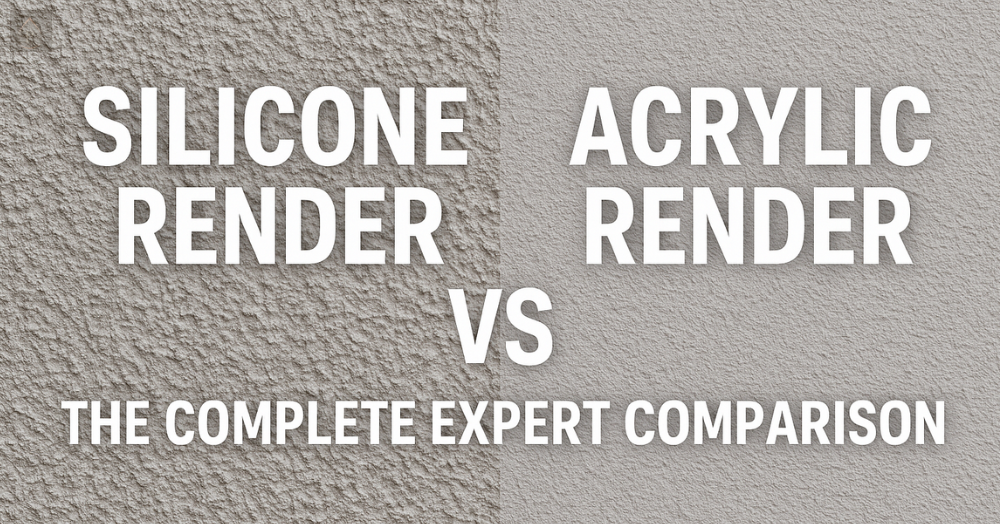
If you’ve noticed damp patches on your internal walls, mould growing around window frames, or render that’s crumbling and cracking outside — your external render could be the problem. Choosing the wrong render doesn’t just look bad. It can trap moisture inside your walls, fuel mould growth, and cost you thousands in repairs down the line. In this guide, we compare silicone render vs sand & cement render so you can make the right call for your South Wales home.
What Is Sand & Cement Render?
How It Works
Sand and cement render is the traditional choice. A renderer mixes four parts sharp sand with one part Portland cement, then applies it in two or three coats directly onto your external walls. Once it dries, you paint it — usually with masonry paint. It’s been used on homes across Cardiff, Newport, and Swansea for decades. It’s cheap, widely available, and most local tradespeople know how to apply it.
Why It Causes Problems in South Wales
Here’s the issue — sand and cement render is rigid. It has no give. Your house naturally expands and contracts with the seasons, and a rigid render simply can’t keep up. Over time, hairline cracks appear. Water gets in. Then the real trouble starts.
South Wales sits in one of the most wind-driven rain exposure zones in the whole of the UK. Rain doesn’t just fall — it gets pushed hard against your walls. A cracked, non-breathable render in this climate is asking for trouble. Water penetrates the surface, soaks into the wall, and has nowhere to go. The result? Damp inside your home and, very often, mould.
At PRBG Environmental, we regularly survey South Wales properties where sand and cement render has trapped moisture for years — and the homeowner had no idea the render was the root cause. If you suspect damp or mould at your property, it’s worth getting professional mould remediation advice in South Wales before spending money on new render.
What Is Silicone Render?
How It’s Applied
Silicone render is a modern, thin-coat system. First, a renderer applies a base coat to create a flat, stable surface. A fibreglass mesh goes into that base coat for extra flexibility and strength. Once it cures, a thin layer of silicone topcoat — usually just 1.5mm thick — goes on top. The colour is baked into the product itself. You never need to paint it.
Why It Suits the Welsh Climate So Well
Silicone render does two things really well — and both matter enormously in South Wales. First, it repels water. Rain hits the surface and runs straight off. Second, and this is the part most people don’t realise, it also breathes. Any moisture already inside your walls can escape outward as vapour. Nothing gets trapped.
That combination — water-repellent on the outside, breathable on the inside — is exactly what a property in a wet Welsh climate needs. Silicone render also resists algae and stays clean longer because rain washes dirt away naturally. It won’t fade, crack, or need repainting for 20 to 30 years.
Silicone Render vs Sand & Cement Render: Head-to-Head
Flexibility & Crack Resistance
Silicone render flexes as your house moves. Sand and cement doesn’t. That’s the core difference. After a few winters of expansion and contraction, a sand and cement render will show hairline cracks. Those cracks widen over time. Silicone render, by contrast, moves with the building and stays intact.
Breathability & Damp
Sand and cement render seals your walls. Moisture that gets into the wall structure can’t escape. This is how render causes damp from the inside — not from a leaking pipe or rising damp, but from trapped moisture that has nowhere to go. Silicone render lets walls breathe, so vapour escapes rather than building up.
Lifespan
A silicone render system, properly installed, lasts 20 to 30 years with minimal maintenance. Many manufacturers back their systems with 25-year warranties. Sand and cement render needs repainting every five to eight years and, if it cracks, will require patching or full re-rendering much sooner.
Cost
This is where sand and cement looks attractive — until you do the maths. Here are typical costs for South Wales properties:
• Sand & Cement: £30–£40 per m² installed (plus painting every 5–8 years)
• Silicone Render: £60–£80 per m² installed (no painting ever required)
• Scaffolding: Usually priced separately — budget £600–£1,200 for a typical semi-detached
When you factor in the cost of repainting, patching cracks, and potential damp remediation, silicone render often works out cheaper over a 20-year period. However, if budget is tight right now, sand and cement may be the only option — just go in with realistic expectations about future maintenance.
Aesthetics
Silicone render comes in a wide range of colours and holds them for decades. UV rays don’t fade it. Sand and cement render looks good when freshly painted, but dulls quickly and stains in wet weather — which in South Wales means fairly often.
Which Render Suits Your South Wales Property Type?
Victorian & Edwardian Terraces (Pre-1919 Solid Walls)
If your home was built before 1919, it almost certainly has solid walls — no cavity. Homes like these need to breathe. Applying sand and cement render to a solid-wall property traps moisture in the wall structure and can cause serious structural damage over time. Silicone render — or lime render for listed or heritage buildings — is the correct choice.
Many homes in Cardiff’s Pontcanna and Canton areas, Newport’s older terraces, and Swansea’s Victorian streets fall into this category. If you’re not sure what wall type you have, a professional survey will tell you quickly.
1950s to 1990s Cavity Wall Properties
Cavity wall homes cope better with sand and cement render because the cavity provides some separation between the outer leaf and the internal wall. However, South Wales’s heavy rainfall still makes silicone a smarter long-term choice. The breathability advantage applies here too — especially in wetter valleys and coastal Swansea areas.
Properties With Existing Damp or Mould
This is the most important point in this entire article — so please read it carefully. You must never render over existing damp without treating the underlying cause first.
Rendering over a damp wall simply seals the moisture in. The mould gets worse, the wall structure deteriorates, and you’ve just spent thousands on new render that’s failing from the inside. The team at PRBG Environmental carries out professional damp surveys across Cardiff, Newport, and Swansea before any remediation or external work begins. If you’ve spotted mould or damp, read more about our mould remediation services in South Wales — we’ll identify exactly what’s causing it before any contractor picks up a trowel.
Common Render Problems and What They’re Telling You
Cracked or Blown Render
Tap your render with your knuckles. If it sounds hollow, it’s “blown” — it has separated from the wall behind it. This usually happens when moisture gets behind a rigid render and freezes, pushing the surface away. Blown render lets in water and needs replacing, not patching.
Green or Black Staining
Algae and mould growth on external render is far more common on sand and cement systems. The porous surface holds moisture and gives algae somewhere to take hold. Silicone render’s hydrophobic surface resists this well. If your render is already staining, it’s a sign moisture is sitting on the surface rather than running off.
Damp Patches Inside After Rendering
This is one of the most common calls we receive at PRBG Environmental. A homeowner gets their house re-rendered, then notices damp patches indoors a few months later. In almost every case, the render was applied over a substrate that already had a moisture problem. The render sealed the moisture in — and it had to go somewhere. Always address damp before you render, not after.
The Hidden Link Between Render and Indoor Mould
Most people think of mould as an indoor problem — something that comes from poor ventilation or a leaking pipe. That’s sometimes true. However, your external render plays a much bigger role than most homeowners realise.
When render cracks, water penetrates the wall. When render is non-breathable, trapped vapour can’t escape. Either way, moisture builds up inside your wall structure. That moisture leads to condensation on internal surfaces, and condensation creates the ideal conditions for mould to grow — especially in bedrooms and living rooms on the external-facing walls of your home.
The solution isn’t simply to paint over the mould or spray it with bleach. The root cause — whether that’s failed render, rising damp, or condensation — needs professional identification and treatment. PRBG Environmental specialises in exactly this. We eliminate the root cause of moisture in Cardiff, Newport, and Swansea properties. Our mould remediation service in South Wales is designed to find and fix the source — not just treat the symptom.
Questions to Ask Your Renderer Before You Commit
Not every rendering contractor will tell you about these issues upfront. Before you sign any agreement, ask these questions:
• Are you accredited by the render manufacturer?
• Will you check the substrate for damp before you start?
• What prep work do you include — mortar repairs, corner beads, reinforcing mesh?
• Does your quote include scaffolding, or is that separate?
• Do you offer a workmanship guarantee as well as a manufacturer warranty?
Always get at least two or three quotes from contractors who physically inspect your property. A quote given over the phone without a site visit is unreliable — and could leave you with a nasty surprise when the job starts.
Our Verdict for South Wales Properties
For the vast majority of South Wales homes, silicone render is the better choice. It handles the wet Welsh climate properly, protects your walls long-term, and saves you money on maintenance over the years. Sand and cement still has a role — mainly for tight budgets or like-for-like repairs on modern cavity wall homes — but it comes with real maintenance commitments and genuine damp risk.
More importantly: if your property already shows signs of damp, mould, or moisture problems, sort those out before you even think about render. New render on a damp wall is money wasted. Get a professional damp survey first. Then choose your render.
Frequently Asked Questions
How much does silicone render cost in South Wales?
Silicone render typically costs £60–£80 per m² installed, including materials and labour. Sand and cement render runs £30–£40 per m². For a typical South Wales semi-detached, total project costs range from £3,000 to £8,000 before scaffolding. Always get a site visit before accepting any quote.
Does silicone render stop damp?
Silicone render is water-repellent and breathable — a powerful combination. It stops external rainwater penetrating the wall, while also allowing moisture already inside the wall to escape as vapour. However, it won’t cure existing damp. If you have an active damp problem, treat it first.
How long does silicone render last in Wales?
A properly installed silicone render system typically lasts 20 to 30 years with minimal maintenance. Most reputable manufacturers back their systems with 25-year warranties. You won’t need to repaint — the colour is integral to the product.
Can I apply silicone render over existing sand and cement render?
Only if the existing render is fully sound — well-adhered, crack-free, and free from damp. If there are hollow areas, cracks, or any sign of moisture, the old render must come off first. Applying silicone over a failed substrate will just delay the inevitable and cost you more in the long run.
What render should I use on an older South Wales terraced house?
For pre-1919 solid-wall properties — which are very common across Cardiff, Newport, and Swansea — you should use a breathable system. Silicone render is the modern choice. For listed or heritage buildings, lime render may be more appropriate. Never use sand and cement render on a solid-wall property.
Can you render over damp walls?
No. Rendering over damp walls traps moisture inside and guarantees further problems — including internal mould and structural deterioration. Always identify and treat the damp first. The team at PRBG Environmental provides professional damp surveys across South Wales before any remediation work begins.
Why does my new render have damp coming through inside?
This almost always means the render was applied over a wall that already held moisture — or that a non-breathable system was used on a solid-wall property. In either case, the moisture had nowhere to go and pushed through internally. Our mould remediation specialists in South Wales can diagnose the root cause and recommend the right fix.
Get Expert Advice Before You Render
Choosing the right render for your South Wales property is important — but getting the moisture situation right first is even more so. If you’ve noticed damp, condensation, or mould in your home, don’t assume new render will fix it. It won’t.
PRBG Environmental helps homeowners across Cardiff, Newport, and Swansea eliminate the root cause of moisture — before it does lasting damage. We’re specialists in mould remediation, damp proofing, and condensation control. We’ll tell you honestly what’s causing your problem and what it takes to fix it properly.
Book your free property survey today — visit prbge.co.uk or get in touch directly. Let’s sort it properly.
