
You notice a damp patch on your bedroom wall. You assume it’s condensation. You buy a dehumidifier. The patch comes back. Sound familiar?
If your home has pebble dash on the outside, that damp patch might have nothing to do with condensation at all. The real culprit could be right outside — quietly letting rain into your walls every time the weather turns. In South Wales, where rainfall is high and a huge portion of the housing stock is pre-war construction, this is one of the most common — and most misunderstood — damp problems we see.
At PRBG Environmental, we’ve helped homeowners across Cardiff, Newport, and Swansea get to the bottom of exactly this issue. This article explains why pebble dash render fails, what the warning signs are, and — most importantly — what you should do about it before the damage gets serious.
What Is Pebble Dash, and Why Is It So Common?
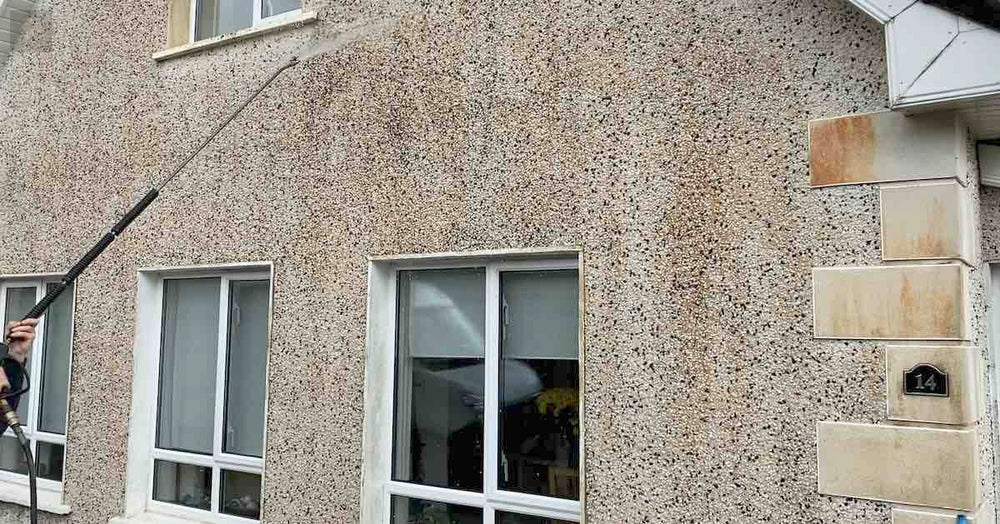
Pebble dash is an exterior wall finish. A layer of mortar goes onto the wall, and then small stones or pebbles are literally thrown at the wet surface, where they stick and set. The result is that rough, textured finish you see on millions of homes across the UK.
It became hugely popular between the 1920s and 1960s, especially in South Wales. Builders liked it because it was quick, affordable, and covered up poor-quality or uneven brickwork. During post-war housing booms, speed was everything — and pebble dash delivered.
When it’s in good condition, pebble dash does its job well. It resists rain, protects the brickwork underneath, and can last for decades. However, here’s the thing: most pebble dash on UK homes was applied 50 to 80 years ago. It’s well past its original design life, and that’s where the problems start.
Why Pebble Dash Render Starts Letting Water In
Pebble dash doesn’t fail overnight. It’s a slow process, and it’s often invisible until water is already inside your walls. Here are the main reasons it happens.
It loses its waterproofing ability over time
Fresh pebble dash has a natural resistance to water. Over the years, however, the mortar behind those pebbles gradually erodes and becomes more porous. Once that happens, your wall starts behaving less like a shield and more like a sponge. In South Wales — where wind-driven rain is relentless — this process speeds up considerably.
Cracks let water straight in
Pebble dash is a rigid material. Houses move slightly as they settle and age. That movement causes the render to crack, and even a small hairline crack is enough to let water behind the surface. Once water gets in behind the render, it has nowhere to go. It just sits there, soaking into the brickwork beneath.
“Blown” render creates hidden voids
This is one of the most damaging failures — and one of the easiest to miss. Over time, sections of render can separate from the brickwork behind them. Water gets trapped in the gap, and the moisture degrades the bond further. You end up with a void between the wall and the render, with water sitting inside it. To check for this, tap the render firmly. A hollow sound instead of a solid thud tells you the render has “blown.”
Pebbles fall off and leave gaps
As pebble dash ages, individual stones loosen and drop out. You’ve probably noticed them on your path or driveway after heavy rain. Once those pebbles are gone, the mortar beneath is exposed directly to the elements. That mortar is far more porous than the finished dash surface — and it absorbs water rapidly.
The damp proof course gets bridged
Your home has a damp proof course (DPC) — a horizontal barrier built into the wall to stop moisture rising from the ground. If pebble dash was applied too low — or if soil, paving, or a cement plinth at the base of the wall has raised the ground level — water can travel up the render, past the DPC, and into the brickwork above. This is especially common in Cardiff and Newport properties built in the 1930s.
Failed seals around windows and doors
Where the render meets your window frames, there’s usually a bead of sealant. When that sealant deteriorates — as it always does eventually — it opens a direct channel for water to run behind the render. This is one of the most common entry points for penetrating damp in older South Wales homes.
Freeze-thaw damage makes everything worse
Water expands when it freezes. When water soaks into micro-cracks in your render and then freezes during a cold snap, it forces those cracks open wider. Each winter cycle causes more damage than the last. If your render already has hairline cracks, a Welsh winter will turn them into something much more serious within a few years.
Warning Signs Your Pebble Dash Is Failing
The good news is that pebble dash failure gives you plenty of warning — if you know what to look for.
On the outside of your property:
- Visible cracking or a crazed, criss-cross pattern across the render surface
- Patches where pebbles are missing, or the surface looks bare and smooth
- Green staining, algae, or moss growth — especially on north-facing walls
- Sections that sound hollow when you tap them firmly
- Gaps or cracks around window frames and door surrounds
- Staining or tide marks running down the wall after rain
On the inside of your property:
- Damp patches that appear or get worse after heavy or prolonged rainfall
- Walls that feel cold and damp to the touch, even in summer
- Peeling wallpaper or bubbling and flaking paint on external walls
- A persistent musty smell in rooms that back onto an outside wall
- Black mould growing on or near an exterior wall
The pattern is key. If your damp patches appear after rainfall and sit on or near an external wall, penetrating damp from your render is the most likely cause.
Penetrating Damp, Condensation, or Rising Damp — Which Is It?
This is where a lot of homeowners get confused — and where a lot of expensive mistakes get made. These are three different problems with three different causes, and treating the wrong one is a waste of money.
Penetrating damp enters through the outside of the building. Damp patches appear on external walls, they’re worse after rain, and they can appear at any height. This is what failed pebble dash causes.
Condensation forms on the inside of walls when warm, moist air meets a cold surface. It’s worst in winter, tends to appear in corners and on cold surfaces like window reveals, and it improves when you increase ventilation or heating. It’s not caused by your render.
Rising damp travels upward from the ground through porous building materials. It appears at the base of walls, usually below one metre in height, and it leaves a distinctive “tide mark” and white salt staining as it dries.
Getting the diagnosis right before spending money on a fix is absolutely essential. However, this is exactly where many homeowners go wrong — they treat the symptoms rather than the cause.
Mistakes That Make Things Worse
Before we get to the solutions, it’s worth covering what not to do. These are the most common errors we see in Cardiff, Newport, and Swansea properties — and they all end up costing more in the long run.
Painting over damaged render. Masonry paint feels like a logical fix — it seals the surface, right? In reality, painting over cracked or blown render traps moisture inside the wall. The water gets in but can’t get back out. The wall stays wetter for longer, and the damage underneath gets worse. Also, if the render is blown, paint will simply crack and peel along the same lines within a season.
Filling cracks with silicone sealant. This buys you a few weeks at best. Water always finds the next weak point, and silicone doesn’t address the underlying reason the render cracked in the first place.
Assuming it’s condensation and buying a dehumidifier. A dehumidifier helps with condensation. It does nothing about water soaking in through your walls from outside. The render keeps failing, the water keeps entering, and the dehumidifier keeps running.
Patching without checking for blown sections first. Applying new mortar over render that has already separated from the wall traps moisture in the void underneath. You seal the problem in rather than fixing it.
How to Actually Fix Pebble Dash Water Ingress
The right fix depends on the extent of the damage. However, every solution starts with the same step: getting a proper diagnosis.
Step one — get a professional diagnosis
Don’t guess, and don’t rely on a “free survey” from a company that’s also selling you a product. A free survey from a damp-proofing product retailer isn’t independent — it’s a sales call.
What you need is an expert who will correctly identify whether you’re dealing with penetrating damp, condensation, rising damp, or a combination of all three. At PRBG Environmental, we begin every job with an honest assessment of what’s actually going on. Our job is to solve your problem, not to sell you a treatment you don’t need.
Localised blown or cracked sections
If the damage is limited to specific areas, a skilled tradesperson can:
- Tap the wall to map every blown section
- Hack off the loose render carefully — not aggressively
- Treat any damp or mould in the exposed brickwork
- Re-render using an appropriate system and re-dash to match
- Reseal all window and door surrounds with fresh, flexible sealant
Widespread porosity or cracking
If the damage is more extensive — or if the render has simply reached the end of its life — a full re-render is usually the more cost-effective solution. A partial repair on very old render rarely lasts more than a few years before the adjacent sections fail too.
When re-rendering older South Wales properties — particularly solid brick homes with no cavity wall — breathable render matters enormously. Solid walls need to be able to release moisture. A non-breathable cement render system traps moisture in the wall and can make damp worse, not better. Lime-based or silicone render systems are far more appropriate for this type of construction.
DPC bridging issues
If the problem stems from render extending below the damp proof course, the render termination needs to be corrected — and any raised paving or soil needs to be pulled back from the wall — before re-rendering begins. Otherwise, the new render will face exactly the same problem as the old one.
When damp has already entered the wall
Sometimes, by the time the render is repaired, moisture has already caused damage inside. That’s when you may also need professional mould remediation alongside the external work. PRBG Environmental’s mould remediation service addresses both the mould itself and the conditions that allowed it to grow — so it doesn’t simply come back after treatment.
Why South Wales Homes Are Particularly at Risk
South Wales receives well above the UK average annual rainfall. Wind-driven rain — rain that hits the wall horizontally rather than falling straight down — is the dominant cause of penetrating damp across the region. Add to that the coastal salt air around Swansea, the freeze-thaw cycles in the valleys, and the fact that the majority of Cardiff and Newport’s housing stock was built before 1950, and you have a region where pebble dash failure is genuinely common.
Many of these older properties are solid brick — meaning there’s no cavity wall to act as a second line of defence. If the render fails, water hits the brickwork directly. There’s nothing between the rain and your interior walls.
Therefore, if you own a pre-war property in Cardiff, Newport, or Swansea with original or early-replacement pebble dash, a professional inspection isn’t a luxury. It’s a sensible precaution — particularly before each winter.
Don’t Wait Until the Damage Is Structural
A small render crack costs very little to fix. A wall that has been absorbing water for three years is a different story altogether. Prolonged water ingress weakens mortar joints, causes timber rot in lintels and floor joists, triggers black mould growth, and can show up on a mortgage survey — stalling a sale at the worst possible moment.
The earlier you catch it, the simpler and less expensive the fix.
At PRBG Environmental, we specialise in identifying the root cause of moisture in South Wales properties — not just treating the surface symptoms. Whether you’re dealing with penetrating damp from failed pebble dash, rising damp, condensation, or mould that keeps coming back, we give you an honest assessment and a lasting solution.
Book your property survey today — and find out exactly what’s happening inside your walls.
Frequently Asked Questions
Is pebble dash supposed to be waterproof? Yes — when it’s in good condition. Pebble dash was designed specifically to protect exterior walls from rain. However, as it ages, cracks, and loses its aggregate, that water resistance gradually disappears. Most UK homes have pebble dash that is well beyond its original design lifespan.
Can pebble dash cause rising damp? Not directly — but it can contribute to the problem. If pebble dash extends below the damp proof course (DPC), or if it bridges the DPC via raised soil or paving at the base of the wall, it can provide a path for moisture to travel upward past the DPC and into the brickwork above.
Why is my interior wall damp after rain? If a damp patch appears or worsens specifically after rainfall, the likely cause is penetrating damp — water entering through an external defect. Failed pebble dash, cracked render, missing sealant around windows, or blocked gutters are the most common culprits. Condensation, by contrast, is usually worst in winter and not directly linked to rainfall events.
How do I know if I have penetrating damp or condensation? Ask yourself: does the damp patch appear or get worse after it rains? Does it sit on or near an external wall? If yes, penetrating damp is the likely cause. Condensation tends to appear on cold surfaces in corners, on window reveals, and behind furniture — and it improves when you ventilate or heat the room. A professional damp survey is the only reliable way to confirm which you’re dealing with.
Can you paint over pebble dash to stop damp? No. Masonry paint applied over cracked or damaged render traps moisture inside the wall and can make the problem significantly worse. Paint should only be applied to render that is sound, intact, and properly repaired. It is a decorative finish, not a damp-proofing treatment.
How much damage can damp cause to a house? Left untreated, penetrating damp causes timber rot in window frames, lintels, and joists; structural weakening of mortar joints; widespread black mould; damage to internal plaster and décor; and a significant reduction in property value. Damp flagged on a building survey can also delay or prevent a mortgage offer. Catching it early keeps repair costs manageable.
How long does pebble dash last? With proper maintenance, pebble dash can last several decades. However, the majority of pebble dash on UK homes was applied 50 to 80 years ago and has received little or no maintenance since. At that age, render failure is common — and professional inspection is strongly advisable.
Can you repair pebble dash without removing all of it? Yes, in many cases. Where the damage is localised — a blown section here, a cracked area there — a skilled tradesperson can hack off and re-render the specific areas. However, if the render is very old and damage is widespread, a full re-render is usually more cost-effective and longer-lasting than repeated patch repairs.
