
If you’re spending too much on heating your home and someone has told you that silicone rendering might help, you’re right to want a straight answer. This article explains exactly how silicone rendering affects your energy bills, when it genuinely helps, and — importantly — what you need to do first to get the most out of it. We’ll keep it simple. No jargon. Just the facts your neighbours should know before spending money on their walls.
What Is Silicone Rendering?
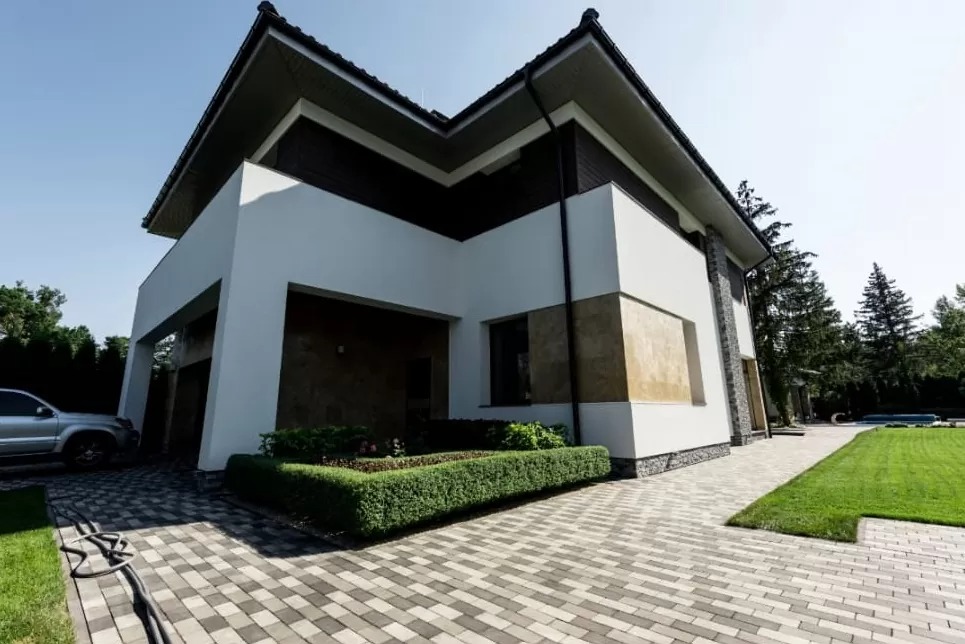
Silicone rendering is a modern exterior wall finish made from silicone resins, aggregates, and pigments. You apply it to the outside of your home, and it creates a tough, flexible, waterproof skin over the masonry. It’s not the same as old-fashioned sand-and-cement render, which cracks easily and can trap moisture.
There are three things that make silicone render different from traditional finishes:
- Hydrophobic — it repels water instead of absorbing it, so rain beads off rather than soaking in
- Vapour-permeable — moisture that builds up inside your walls can still escape outward
- Crack-resistant — the flexibility of silicone means it moves with your home as temperatures change
For homeowners in Cardiff, Newport, and Swansea, where rain is relentless for much of the year, these properties matter a great deal.
So, Does Silicone Rendering Actually Reduce Energy Bills?
Yes — but the honest answer is: it depends on how it’s used.
Silicone render on its own is not an insulator. It doesn’t have the same thermal resistance as a layer of foam board or mineral wool. However, it reduces energy bills in two important and often overlooked ways.
Mechanism 1: Dry Walls Lose Far Less Heat
This is the big one, and most people don’t know about it. The Building Research Establishment (BRE) found that a wall containing wet or damp materials loses 35–50% more heat than a dry wall. Water conducts heat far better than air. When rain soaks into your brickwork, it pushes out the air pockets that act as natural insulation and replaces them with water — which then lets heat escape at a much faster rate.
Silicone render stops this from happening. It keeps your external walls dry, which means your existing insulation can do its job properly. Even if you don’t add new insulation, simply keeping your walls dry can make a noticeable difference to how long your boiler runs.
Mechanism 2: Silicone Render as Part of an External Wall Insulation System
The biggest energy savings come when silicone render works as the outer finish of an External Wall Insulation (EWI) system. In this setup, a layer of insulation board goes onto your outer wall, and silicone render covers and protects it. Together, EWI and silicone render can cut heat loss by up to 40% in solid-wall homes.
This matters most for older properties — the kind you’ll find all across South Wales. Houses built before 1940 typically have solid walls with no cavity. Those walls let through roughly twice as much heat as cavity walls. An EWI and silicone render system is one of the most effective things you can do for that type of home.
| Approach | Energy Saving Potential |
| Silicone render alone (on dry walls) | Moderate — protects existing insulation |
| Silicone render alone (on damp walls) | Low — damp must be treated first |
| EWI + silicone render (solid wall home) | High — up to 40% reduction in heat loss |
The Hidden Problem: Damp Walls Are Costing You Money Right Now
Here’s something your energy company won’t tell you. If your walls are damp — even slightly — you’re already paying more to heat your home than you need to. It’s not just about comfort. It’s about physics.
When moisture gets into your walls, it doesn’t just sit there. As it evaporates, it takes heat energy with it in a process called evaporative cooling. This pulls warmth out of your wall and out of your home. Your boiler then has to work harder to replace that lost heat. Month after month, that adds up.
Condensation makes things even worse. When warm, humid air inside your home hits a cold external wall, it condenses into droplets. Those droplets feed damp patches, encourage mould, and further degrade your wall’s thermal performance. For every 1% rise in relative humidity inside your home, you may need to heat it more just to maintain the same level of comfort.
Therefore, if you’re planning silicone rendering to save money on bills, treating any existing damp first is not optional — it’s essential. Applying render over a damp wall is like painting over rust. You’re sealing in the problem rather than solving it.
Mould, Damp, and Energy Loss — Why They’re All Connected
Most homeowners think of damp and mould as an aesthetic problem or a health issue. Both are true. However, they’re also an energy problem.
Mould grows on cold, damp surfaces — usually where warm interior air meets an uninsulated external wall. That mould is a sign of poor thermal performance. It means heat is escaping, moisture is condensing, and your wall is not doing its job.
This is exactly why at PRBG Environmental, we look at the root cause of moisture before we ever talk about surface treatments. Our approach across Cardiff, Newport, and Swansea starts with a professional moisture survey. We identify whether you’re dealing with:
- Rising damp — moisture travelling up from the ground
- Penetrating damp — rainwater coming through the walls
- Condensation — warm, moist air cooling and depositing moisture on cold surfaces
Each of these needs a different fix. Silicone rendering helps significantly with penetrating damp. However, if rising damp or condensation is the root cause, render alone won’t solve the problem — and it won’t save you the energy bills you’re hoping for.
If you’re seeing black mould patches on your walls, our mould remediation service in South Wales tackles the source of the problem, not just the surface. We remove the mould safely, treat the underlying moisture issue, and advise on the right sequence of works to protect your home long-term.
Why This Matters More in Wales
Wales has some of the highest average rainfall in the UK. Swansea, for example, receives over 1,200mm of rain per year. Newport and Cardiff aren’t far behind. That constant exposure to moisture means that external walls here work much harder than walls in drier parts of the country.
On top of that, South Wales has a large proportion of pre-1919 terraced and semi-detached homes with solid masonry walls. These properties:
- Have no cavity insulation
- Are more vulnerable to penetrating damp
- Lose heat at roughly twice the rate of cavity wall homes
- Typically carry poor EPC ratings (D or below)
Also worth noting: Welsh rental law is tightening. The Minimum Energy Efficiency Standards (MEES) require landlords to meet minimum EPC ratings. If you own a rental property in Cardiff or Newport with an old solid-wall exterior, silicone render combined with EWI could help you meet those requirements while lowering energy bills for your tenants.
Furthermore, Welsh Government funding schemes — including Warm Homes Wales, ECO4, and the Home Upgrade Grant (HUG2) — can offset the cost of EWI and render for eligible households. It’s worth checking your eligibility before you spend anything.
The Right Order of Works
This is the part most articles skip. Getting the sequence right determines whether your investment pays off.
Here’s the order we recommend:
- Moisture survey — identify all sources of damp and condensation before anything else
- Damp proofing — treat rising damp or penetrating damp at source
- Condensation control — improve ventilation or thermal performance where condensation is the cause
- EWI installation — add external insulation boards to the outer walls
- Silicone render application — apply as the protective, weatherproof finish over the EWI
Skipping steps 1–3 and going straight to rendering is a common and costly mistake. You’ll spend money on a finish that’s fighting a problem underneath it, and you won’t get the energy savings you were promised.
How Much Could You Actually Save?
Let’s look at realistic numbers.
Silicone rendering in the UK typically costs between £70 and £120 per square metre, including materials and labour. A typical semi-detached home might have 80–120 m² of external wall, so you’re looking at a project cost in the region of £6,000–£14,000 depending on specification and location.
When combined with EWI on a solid-wall home, studies suggest annual heating bill savings of £300–£600 per year are realistic. Some older, poorly insulated homes in Wales have reported even higher savings, particularly when rising damp or chronic wall saturation was also addressed.
Additionally, a better EPC rating improves your property’s market value and can affect mortgage rates — lenders increasingly offer better terms for energy-efficient homes.
Is Silicone Rendering Worth It? Here’s the Honest Verdict
Silicone rendering is worth it when:
- Your external walls are solid (pre-1940 construction)
- You combine it with EWI for maximum thermal gain
- You treat any damp or condensation issues first
- You’re in a high-rainfall area like South Wales
It’s less effective when:
- You apply it over damp or saturated walls without treating the cause
- Your property has cavity walls (where internal or cavity fill insulation is the better option)
- Condensation is your main problem — render alone won’t fix that
The bottom line is that silicone render is an excellent protective finish that keeps your walls dry and extends the performance of your insulation. However, it’s not a magic fix on its own. It works best as part of a whole-wall approach that starts with understanding your moisture problem.
The PRBG Environmental Approach
At PRBG Environmental, we specialise in getting to the root of moisture problems in homes across Cardiff, Newport, and Swansea. We don’t start with the surface — we start with a survey. Before we recommend any remediation, rendering, or insulation solution, we find out exactly what’s causing the problem.
Our mould remediation service in South Wales is often the first step for homeowners who’ve noticed black spots on walls, a musty smell, or cold patches that won’t go away. We treat the mould safely, address the moisture at source, and give you a clear plan for what comes next — whether that’s damp proofing, condensation control, or recommending a render and EWI solution.
If you’re in South Wales and you’re unsure where your energy losses are coming from, we offer free moisture surveys. Start there — before you spend a penny on render.
PRBG Environmental provides expert mould remediation, damp proofing, and condensation control across Cardiff, Newport, and Swansea. We eliminate the root cause of moisture — not just the symptoms. Book your free survey today.
Frequently Asked Questions
Does silicone render actually insulate a wall? Not on its own. Silicone render protects your wall from water and keeps it dry, which lets your existing insulation work properly. The real insulation benefit comes when silicone render is used as the outer finish over an External Wall Insulation (EWI) system.
Can silicone rendering stop damp coming through walls? Yes, for penetrating damp — the kind caused by rain soaking through external walls. Silicone render is hydrophobic, so it repels water rather than absorbing it. However, it won’t fix rising damp or condensation. Those need separate treatment.
Can silicone rendering reduce condensation on internal walls? It helps indirectly. Silicone render is vapour-permeable, which means moisture trapped in your walls can escape outward. It also keeps walls drier overall, which raises wall surface temperatures and reduces the chance of condensation forming on the inside. However, if condensation is severe, you’ll need proper ventilation or a full EWI system as well.
Will silicone rendering improve my EPC rating? On its own, the improvement is modest. Combined with EWI, the improvement can be significant — sometimes moving a property from a D to a C or even B rating. That matters for landlords who need to meet MEES requirements.
How long does silicone render last? A well-applied silicone render should last 25–40 years with very little maintenance. It resists algae growth, UV fading, and cracking, so it stays looking good and performing well for decades.
Is silicone rendering suitable for older terraced houses in Cardiff and Newport? Absolutely. In fact, pre-1919 solid-wall terraced homes are among the best candidates for silicone render combined with EWI. They tend to have the worst heat loss and the most to gain from external wall treatment.
Do I need damp proofing before silicone rendering? Yes — if any form of damp is present. Rendering over damp walls locks in moisture and can make the problem worse. A proper moisture survey (like the ones PRBG Environmental carries out across South Wales) should always come first.
Are there grants available for silicone rendering in Wales? There are grants available for EWI, which silicone render is typically part of. Warm Homes Wales, ECO4, and HUG2 all offer funding for eligible households. Check your eligibility through the Welsh Government or ask your installer to help you apply.
