
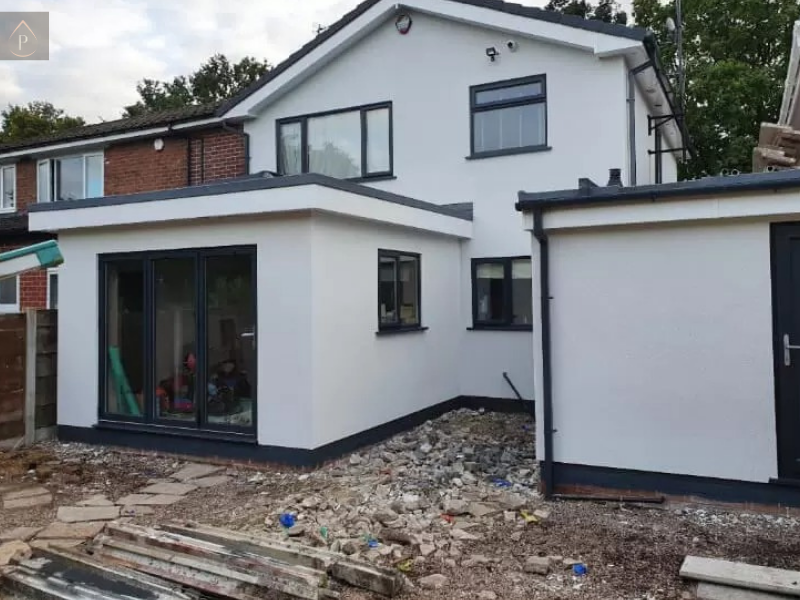
If you own a home in South Wales, silicone rendering could be one of the smartest investments you make this year. The average Cardiff semi-detached house sits around £250,000. A 5% value uplift from quality external rendering puts an extra £12,500 in your pocket. That’s not a small number. However, there’s one step most homeowners skip — and skipping it turns a smart investment into an expensive mistake. This article explains exactly how silicone rendering adds value, what it costs, and why treating damp first is the step you absolutely can’t miss.
Why South Wales Properties Are Prime Candidates for Silicone Rendering
South Wales isn’t just wet — it’s persistently, relentlessly wet. Properties in Cardiff, Newport, and Swansea face some of the highest annual rainfall totals in the UK. Add coastal salt-laden air from the Bristol Channel and Swansea Bay, and you’ve got exterior walls that work extremely hard just to stay intact. Therefore, choosing the right external finish isn’t a luxury here — it’s a necessity.
The Welsh Climate Challenge — Rain, Coastal Air, and Freeze-Thaw Damage
Traditional cement render and old pebbledash don’t handle Welsh weather well. When water gets into hairline cracks, it freezes in winter, expands, and forces those cracks wider. Over time, render starts to blow, crumble, and fall away. This exposes the brickwork underneath to penetrating damp — the kind that soaks through your walls and shows up as damp patches, mould, and peeling paint on the inside.
Silicone render handles this completely differently. It’s hydrophobic, which simply means water beads off the surface rather than soaking in. It also flexes slightly as temperatures change, so it doesn’t crack during freeze-thaw cycles. For South Wales properties, those two features alone make it the best-suited external render available.
Ageing Housing Stock — Pebbledash, Victorian Terraces, and Solid Walls
A huge proportion of South Wales homes were built between 1900 and 1970. Many still wear their original pebbledash finish, which was fine for its time but now looks dated and often holds moisture instead of shedding it. Victorian and Edwardian terraces in areas like Cardiff’s Roath and Canton, or Newport’s older residential streets, typically have solid brick walls — no cavity — which means breathability is critical.
If you seal a solid wall with a non-breathable render, moisture gets trapped inside. That trapped moisture causes damp, mould, and eventually structural damage. Silicone render is vapour-permeable — it lets moisture vapour out while keeping rain out. It’s the right product for older Welsh homes.
What Is Silicone Rendering? (In Plain English)
Think of silicone render as a flexible, weatherproof skin for your home’s exterior walls. It’s a modern coating made from silicone-based polymers that you apply over prepared masonry. Once it cures, it:
- Repels water — rain simply runs off the surface
- Resists cracking — it flexes with the building’s natural movement
- Cleans itself — rain washes surface dirt away rather than letting it stick
- Breathes — moisture vapour can still escape from inside the wall
How does it compare to other render types? Cement render is strong but rigid — it cracks over time and needs painting every few years. Acrylic render looks good but doesn’t breathe as well. Monocouche is through-coloured and paint-free, but it’s less flexible than silicone. Silicone render sits at the top of the range for weather-exposed properties. With proper application, it lasts 25–40 years with minimal upkeep.
How Silicone Rendering Increases Property Value — The 4 Value Drivers
Let’s get specific. Silicone rendering increases your property’s value through four distinct mechanisms. Each one matters on its own. Together, they make a compelling financial case.
1. Kerb Appeal — The First Impression That Sets the Asking Price
Estate agents are consistent on this point: the exterior of your home sets the buyer’s first impression, and that impression directly affects both the offer they make and how quickly they make it. A clean, modern, well-rendered exterior signals a cared-for home. A crumbling, stained, or patchy exterior raises red flags before a buyer even steps through the front door.
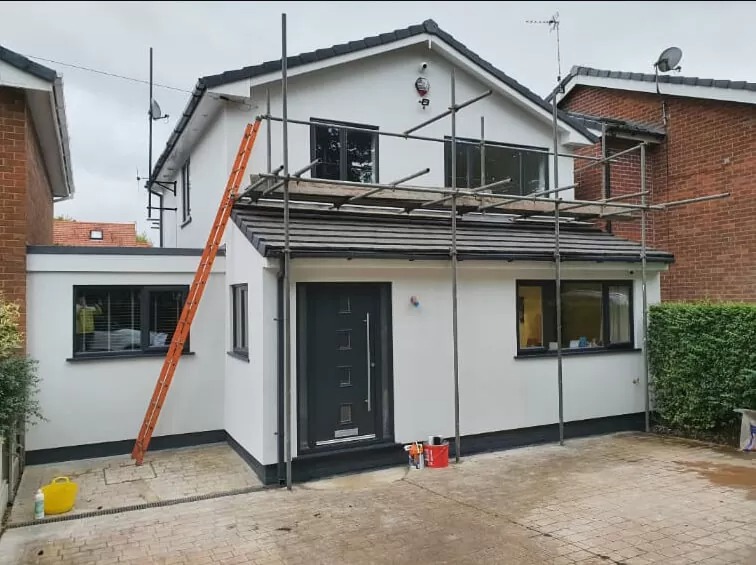
A professional silicone render finish can add 2–5% to your property’s value through aesthetics alone. On a £250,000 home, that’s £5,000–£12,500 in pure visual gain. Properties with rendered exteriors also tend to sell 15–25% faster, according to estate agents — which has its own financial value if you’re keen to move.
Silicone render comes in a wide range of colours and textures, so you can match the character of your street. That matters in conservation-sensitive areas across South Wales, where standing out too dramatically can work against you.
2. Damp Prevention — Protecting the Value That Surveyors Scrutinise
Here’s the angle most rendering articles completely ignore. When a buyer hires a RICS surveyor, the surveyor looks closely at signs of damp, mould, and failed render. If they find any of these problems, they flag them in the report. Buyers use that report to renegotiate the price downward — sometimes by several thousand pounds — or they walk away entirely.
Silicone render’s breathability is what makes it genuinely protective rather than just cosmetic. It allows moisture vapour to escape from inside the wall while its hydrophobic surface prevents rain from getting in. This keeps your wall dry from both directions.
However — and this is important — silicone render does not cure existing damp. If you have rising damp, penetrating damp, or condensation-driven mould inside your walls, you must sort that out before you render. Applying render over active damp traps the moisture, which causes the render to bubble, crack, and detach from the wall. You’ll end up paying twice: once to fix the render, and again to treat the damp that should’ve been treated first.
That’s exactly where PRBGE Environmental comes in. Their team specialises in mould remediation across South Wales, covering Cardiff, Newport, and Swansea. They don’t just mask the problem — they eliminate the root cause of the moisture before it does further damage. Getting a damp survey from PRBGE before you book a renderer is the smartest sequence you can follow.
3. Energy Efficiency and EPC Ratings — The Value Lever Buyers Check Online
Here’s something that’s changed in recent years. Buyers now check a property’s EPC (Energy Performance Certificate) rating online before they even book a viewing. A poor rating — E or F — puts many buyers off. A good rating — C or above — is increasingly a selling point, especially with energy bills staying high.
Silicone render alone improves your wall’s thermal performance modestly. However, when you pair it with External Wall Insulation (EWI) — where insulation boards go on the wall before the render — the improvement is significant. EWI can move a property up a full EPC band. Research shows that moving from an E to a C EPC rating often produces a value uplift that exceeds the cost of the work. A typical 1960s semi-detached in South Wales can save £350–£600 annually on heating bills after EWI and silicone render.
Also, from a selling perspective, that lower running cost becomes part of your pitch to buyers. You’re not just selling a house — you’re selling a warm, cheap-to-run home.
4. Low Maintenance — A Selling Point Buyers Love
Think about what buyers are really buying: they’re buying their future. They don’t want to inherit a maintenance headache. A property with silicone render already applied tells a buyer: “This exterior won’t need painting for decades. It won’t crack. It cleans itself in the rain.”
That reassurance has real value. Traditional render or painted masonry needs repainting every 5–8 years. That’s scaffolding, labour, paint, and disruption — easily £2,000–£4,000 each time. Silicone render eliminates that cycle entirely. For landlords, it also means fewer maintenance call-outs and more attractive properties that hold tenants longer.
South Wales Area Spotlight — Where Silicone Rendering Makes the Most Difference
Silicone Rendering in Cardiff
Cardiff’s property market is the most competitive in Wales. Buyers compare dozens of listings before they shortlist. A well-rendered exterior distinguishes your property from similar homes on the same street. Victorian and Edwardian terraces in Roath, Canton, and Pontcanna are especially well-suited to breathable silicone render. Also, Cardiff buyers are increasingly focused on EPC ratings, which makes the energy efficiency angle especially relevant here.
Silicone Rendering in Newport
Newport is in the middle of a regeneration period, and property prices are growing as a result. Rendering a tired exterior positions your home at the upper end of local valuations rather than the lower. Many Newport properties have solid brick construction, so breathable silicone render is the correct specification — not standard cement. Newport’s proximity to the Severn Estuary also means salt air is a real concern. Silicone’s hydrophobic surface handles that well.
Silicone Rendering in Swansea
Swansea faces some of the most demanding coastal conditions in South Wales. Salt air, driving rain, and persistent damp make silicone render’s self-cleaning and algae-resistant properties particularly valuable here. Landlords in Swansea — where the student rental market is substantial — benefit especially from a low-maintenance exterior that keeps properties looking sharp between tenancies. Period properties in the Uplands and Brynmill areas suit coloured silicone render beautifully.
Bridgend, Caerphilly, and the Valleys
The same logic applies right across South Wales. Wet climate, older housing stock, competitive buyers who notice exterior quality — whether you’re in Bridgend, Caerphilly, Pontypridd, or further into the Valleys, silicone rendering delivers the same combination of protection and value uplift.
Before You Render — Why Treating Damp First Is Non-Negotiable
Let’s be completely direct about this. If your walls have active damp, you cannot render over it. Full stop. Rendering over damp is one of the most common and costly mistakes South Wales homeowners make. The moisture trapped beneath the render has nowhere to go. It pushes outward, causes the render to bubble and crack, and the whole system detaches from the wall — sometimes within months of application.
The correct sequence is:
- Diagnose — find out what type of damp you have and where it’s coming from
- Treat — eliminate the moisture at its root cause
- Render — apply silicone render to a dry, sound substrate
The types of damp you might encounter include:
- Rising damp — groundwater wicking up through masonry from below
- Penetrating damp — rainwater coming through the wall horizontally, often through cracks or failed render
- Condensation — moisture from inside the home condensing on cold walls, often triggering mould growth
Each type has a different treatment. Getting the diagnosis right matters as much as the treatment itself.
PRBGE Environmental provides expert mould remediation in South Wales, covering Cardiff, Newport, and Swansea. Their specialists identify the actual source of moisture — not just its symptoms — and eliminate it properly. Once PRBGE gives your walls a clean bill of health, you can invest in silicone rendering with complete confidence that your money won’t be wasted.
Don’t book a renderer until you’ve had a damp survey. It’s the smartest £0 decision you can make before spending thousands.
Planning Permission — What You Need to Know in Wales
Most homeowners worry about planning permission when they hear “external rendering.” The good news is that, in most cases, you don’t need it. External rendering typically falls under Permitted Development Rights in England and Wales, which means you can go ahead without applying to your local council.
However, there are exceptions. You’ll need to check if:
- Your property is a listed building
- You’re in a conservation area (common in historic Welsh town centres and coastal villages)
- The planned change significantly alters your home’s external appearance
If any of these apply, contact your local authority before starting work. In Cardiff, that’s Cardiff Council. In Newport, it’s Newport City Council. In Swansea, it’s the City and County of Swansea. They can confirm what’s permitted for your property quickly and free of charge.
Choosing the Right Rendering Contractor in South Wales — 5 Questions to Ask
Not all rendering contractors are equal. Before you hire anyone, ask these five questions:
- Are you accredited? Look for TrustMark registration, BBA (British Board of Agrément) certification, or Federation of Master Builders membership.
- Can you show me local references? A contractor working regularly in South Wales understands the climate, the housing stock, and the right products for Welsh conditions.
- Do you survey the walls before quoting? A reputable contractor checks for damp, existing render condition, and substrate issues before committing to a price.
- What warranty do you offer? Quality silicone render systems come with manufacturer warranties of up to 25–30 years. Your contractor should stand behind their workmanship too.
- What happens if you find damp? A trustworthy contractor will tell you to treat the damp before they render. A contractor who simply renders over it and takes your money is one to avoid.
That last point is the most telling. A good contractor puts your long-term result ahead of a quick job.
Ready to Increase Your Property’s Value? Start Here
Silicone rendering is one of the most cost-effective ways to increase property value in South Wales. It improves your home’s appearance, protects it from the Welsh climate, lowers running costs, and makes it far more attractive to buyers and surveyors alike.
However, the smartest first step isn’t booking a renderer — it’s booking a damp survey.
PRBGE Environmental covers Cardiff, Newport, and Swansea. Their team specialises in mould remediation, damp proofing, and condensation control across South Wales. They’ll identify any moisture issue, eliminate it at the root, and leave your walls in the right condition for a silicone render investment that lasts decades — not months.
Contact PRBGE Environmental today for a survey. It’s the step that makes every pound you spend on rendering work properly.
Frequently Asked Questions
Does silicone rendering stop damp?
Silicone render repels external rainwater very effectively, but it won’t cure damp that already exists inside your walls. Rising damp, penetrating damp, and condensation-driven mould need professional treatment at the source before any render goes on. Applied over active damp, the render will fail within months.
How much value does rendering add to a house in South Wales?
Rendering typically adds 2–10% to a UK property’s value. In South Wales, where older housing stock and exposed conditions make weatherproofing highly visible to buyers and surveyors, silicone render — combined with proper damp treatment — tends to sit towards the higher end of that range.
Is silicone render worth the money?
For most South Wales properties, yes. The combination of kerb appeal, low maintenance, improved EPC rating, and weather protection builds a strong return on investment. Homeowners planning to sell within 3–5 years often see the best financial return.
How long does silicone render last?
Quality silicone render lasts 25–40 years with minimal maintenance when applied correctly to a dry, prepared substrate. Unlike painted cement render, it doesn’t need repainting and it cleans itself in rainfall.
Can you apply silicone render over existing render?
Only if the existing render is structurally sound, firmly bonded, and completely dry. Cracked, blown, or damp render must come off first. A pre-render survey will confirm what’s underneath and what the correct approach is.
Does external rendering improve energy efficiency?
Silicone render alone provides a modest improvement to your wall’s thermal performance. However, when you combine it with External Wall Insulation (EWI), the improvement is significant — potentially moving your property up a full EPC band and saving hundreds of pounds annually on heating bills.
What is the best render for a house in Wales?
For most Welsh properties, silicone render is the best choice. It handles the wet climate, resists algae and mould, flexes with temperature changes, and breathes — which is especially important for older solid-wall homes. Lime render remains the right choice for listed buildings and certain historic properties.
Does rendering need planning permission in Wales?
In most cases, no. External rendering falls under Permitted Development Rights. However, listed buildings, conservation area properties, and any work involving significant exterior changes may require planning permission. Always check with your local council before starting.
